Reviews

Thriller with Chinese Characteristics

Sam Geall reviews The Spy’s Daughter by Adam Brookes

The Spy’s Daughter, a novel by former BBC correspondent Adam Brookes, completes a trilogy starring Philip Mangan, a peripatetic journalist-turned-agent. Brookes’ first two books both drew strong reviews, and several memorable characters familiar from the earlier instalments are back – most notably, Mangan’s ex-soldier handler, haunted by her tours of Iraq and Afghanistan – while some interesting new ones are introduced, including a sleeper agent in the United States and a gifted young engineer.

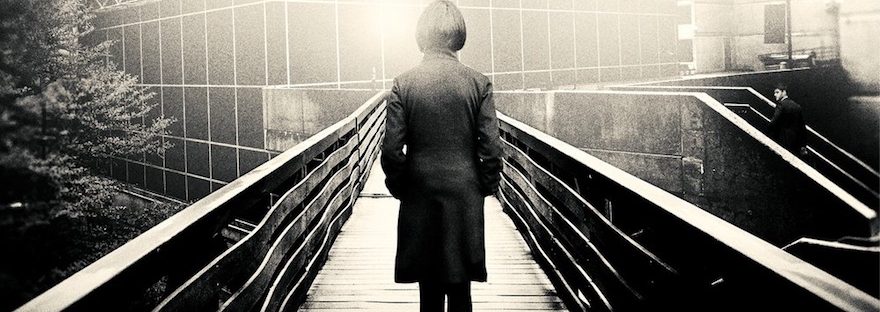
In The Spy’s Daughter, Mangan is wandering in Southeast Asia, hung out to dry by his erstwhile MI6 handlers in London, and living his cover as a freelance journalist. But he is pursued by Chinese intelligence, and possessed of a gnawing desire to tug at a lead: an address, given to him on the banks of the Mekong River by a treacherous Chinese colonel. This takes him to Suriname, a tiny state on the Atlantic coast of South America, where a Chinese lawyer helps officials to launder their money, and into the path of Pearl Tao.
Reviews

The Problem with “Feminism”

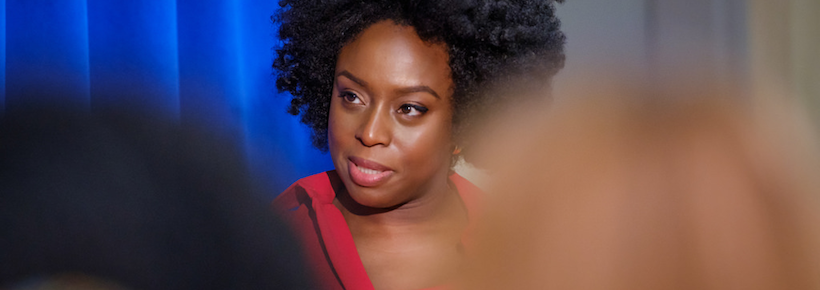
Translating Chimamanda Ngozi Adichie’s We Should All Be Feminists – by Barclay Bram

We Should All Be Feminists, Chimamanda Ngozi Adichie’s TEDx-talk-turned-book, has been translated into Chinese. Released by the People’s Cultural Publishing House in June, the 84-page book closely follows the original’s format aside from one glaring change: the word “feminist” has been dropped from the title.

The book’s pale blue cover has in large text the English title We Should All Be Feminists, but the Chinese has been translated down to the more innocuous The Rights of Women. Why the inconsistency?

Feminism is an increasingly problematic term in China. While the Chinese Communist Party is proud of its record for overturning many of the patriarchal structures that had oppressed Chinese women for centuries – proclaiming that “women can hold up half the sky” – in recent years there have been high-profile crackdowns on feminist activists and feminist websites. In 2015 five feminists were detained just before International Women’s Day for trying to put together a campaign against sexual harassment. Earlier this year the Feminist Voices Weibo account, an influential microblog for the women’s movement in China, was forced offline for 30 days for posting content that was anti-Trump and that implored women to join in an international women’s strike.

Reviews

Republic of Letters

Eleanor Goodman reviews A New Literary History of Modern China, edited by David Der-Wei Wang

One evening this summer as I was waiting for a table at a restaurant, I overheard a well-dressed woman describing a bike trip she was planning to take to Japan. “I’m so excited about it,” she told her companion, “that I just picked up Memoirs of a Geisha.” That literature is a window onto a culture – a point of access that can be utilized even from afar, a safe mental space in which one’s own attitudes, prejudices, preconceptions, and expectations can be challenged and even altered – is an idea that is not only true but important. In an era in which globalism is a simple fact and travel to previously remote places is easy and ordinary, while simultaneously xenophobia and racial fear-mongering are on the rise, there is an increasing need for exposure to other cultures in many forms. Then again, reading a book written by a white man about sex workers in the 1930s and 40s does not necessarily offer the most accurate picture of Japan as it exists today.

Reviews

A Tale of Two Schools

Sarabeth Berman reviews Little Soldiers by Lenora Chu

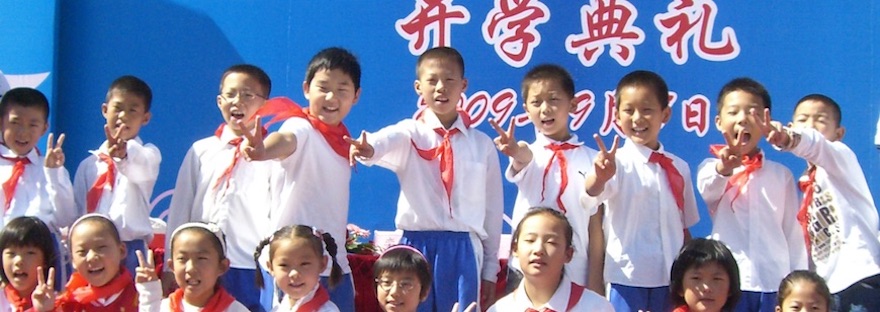
For millions of children in China today, the experience of school is much like a scene I encountered one afternoon in the fall of 2010, in a village in southwest China. Working for a Chinese non-profit education organization, I boarded a plane in Beijing one morning, flew three-and-half hours to Kunming, the capital of Yunnan province, then took another short flight to Lincang, a city near the Burmese border. From there, we rode six hours through lush but impoverished mountains, famous for their tea plantations, to the village of Shao Jie (population 3,000). Finally we reached our destination, the local school, just as its students were breaking for dinner. It stood at the top of a hill, nestled in Yunnan’s famous clouds.

Reviews

Lighting Up the Past

Liz Carter reviews Jottings under Lamplight, Lu Xun’s essays

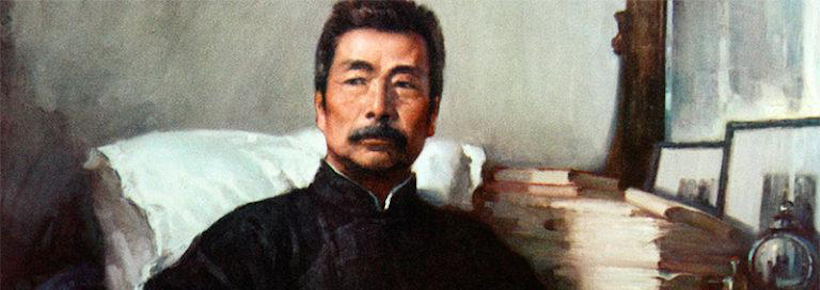
Lu Xun is considered the father of modern Chinese literature, but until recently his essays, the format in which he was most prolific, were not widely available in English translation, with most other translations focusing on his short stories. Jottings Under Lamplight, a new collection from Harvard University Press, brings 62 of his essays, grouped thematically, to English readers, aiming to “provide lucid and accurate translations for specialists and allow a more general readership access to Lu Xun’s works.”