In the second episode of the Oolong Podcast, host Lev Nachmann talks to Pulitzer-Prize winning journalist Ian Johnson, who most recently has documented religious life in today’s China in his book, The Souls of China: The Return of Religion After Mao. Ian delves into his writing process, what it’s like to research religion in China, and some of his thoughts on recent Vatican-Chinese relations.
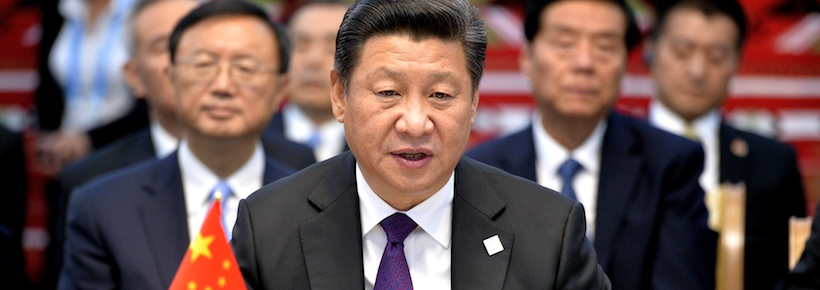
The Chairman of Everything Xi Jinping has emerged from the annual parliamentary meetings facing a rough year ahead. China's economy is growing at its slowest in nearly three decades, amid a massive trade war and spiralling local debt, with rumblings of discontent from delegates about everything from the Belt and Road Initiative to Made in China 2025. Louisa and Graeme are joined by Andrew Collier of Orient Capital Research and Ryan Manuel of Hong Kong University, who argue that both political and economic decentralisation is underway, laying Xi vulnerable to forces beyond his control.
We’re delighted to bring a new feature to the China Channel: a series of podcasts hosted by Lev Nachmann, a PhD student at the University of California at Irvine. The podcast, titled Oolong, is produced with the sponsorship of the UCI Long U.S.-China Institute; each episode puts a China watcher on the interview chair, for a pithy and illuminating conversation about their background and work. In the first episode, Lev talks to Scott Tong (whom we also interviewed previously), author of the memoir A Village with My Name: A Family History of China’s Opening to the World in which he sought to uncover his family’s history in China, after working there as a reporter for many years. Scott currently reports about sustainability for NPR’s Marketplace. Hear about his pursuit, his family’s reaction, as well as his thoughts on being a reporter in China.
The Pacific is seeing a flurry of diplomatic activity: Australia is “stepping up,” New Zealand has ordered a “Pacific reset,” and even Great Britain is reopening missions in its former Pacific colonies. The reason for their sudden interest is simple: China. If Beijing comes good on $4 billion in aid pledges, it could overtake Canberra as the largest donor to the Pacific. Often missed in this new Great Game are the concerns of Pacific Islanders, looking to make the best of this fresh interest in their blue Pacific. To discuss the Pacific’s China challenge, Graeme and Louisa are joined by Vanuatu’s Foreign Minister Ralph Regenvanu, Secretary-General of the Pacific Islands Forum Dame Meg Taylor, as well as Pacific academics Patrick Matbob and Transform Aquora and former Chinese diplomat Denghua Zhang. ∎
The Vatican and China have signed a deeply controversial agreement on the appointment of bishops, ending the cold war that has frozen ties since 1950. That deep freeze led to schisms between the official and underground churches, with some clergy persecuted for decades and the church refusing to recognize Beijing's handpicked bishops. But the new agreement has divided the faithful yet again, with some fearing Catholicism is facing calamity as President Xi Jinping tightens control over religion. To explore what’s behind this sudden rapprochement and what it could mean for China’s 12 million Catholics, Louisa and Graeme are joined by Jeremy Clarke, a former Catholic priest who has researched China's historical relations with the Holy See.