Essays

The Passion of Giuseppe Castiglione

How an 18th century Jesuit painter revolutionized Chinese art – Matthew Ehret-Kump

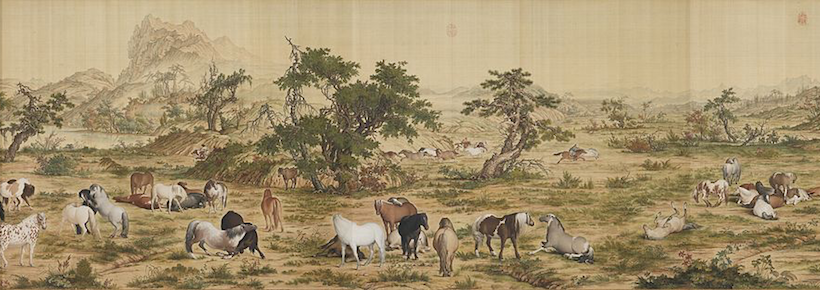
Hardly anyone in the West knows of the name Giuseppe Castiglione. Even fewer know of the name Lang Shining (郎世寧). Yet if you were to ask a Chinese citizen with an elementary knowledge of painting, both of these names would invoke the greatest affinity and respect. For Giuseppe Castiglione and Lang Shining are the same individual, who fomented an artistic revolution by combining the best artistic traditions of European and Chinese culture.

Born in 1688 in Milan, Castiglione mastered the greatest artistic techniques of the Italian renaissance. After his career as a muralist had only begun, the talented young artist, who had recently joined the Jesuit order, was tasked with an incredible challenge: he was invited to China. 
Essays

Poetic Friendship

Thoughts on Meng Lang’s passing – Denis Mair

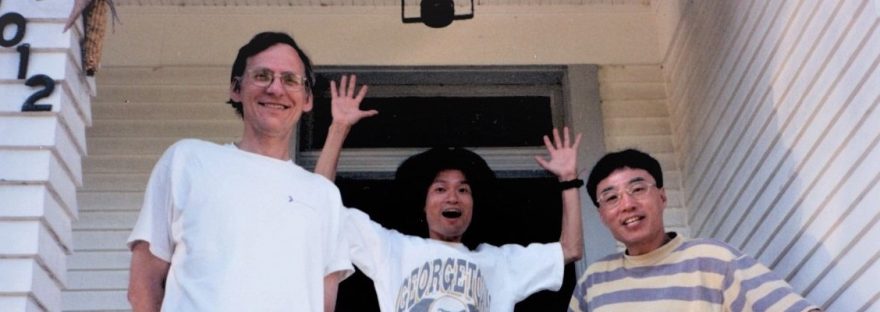
My friend Meng Lang passed away in Hong Kong on December, 12 2018. The fact that I heard the news on my birthday (December 16) is perhaps an indication of our close karmic tie. His death is a jolt of mortality for me, because he was ten years my junior.

Meng Lang was active in the underground poetry scene from the mid-1980s. He was co-editor of an anthology of underground and non-official poetry published in 1986 called An Exhibition of New Poetry Groups (86年诗群大展). He left China in 1995 to spend three years as visiting poet at Brown University. After that he remained in exile, dividing his time between Boston and Hong Kong. Meng Lang’s passport was revoked when he left mainland China in 1995, so he was unable to go back to visit his family in Shanghai. He was given special “white travel passes” to return to Shanghai three times, for very short periods, to visit his ailing parents and attend their funerals.

Essays

Bill Clinton Never Said “Butchers of Beijing”

How an iconic phrase was misattributed for thirty years – Zachary Haver

Then-candidate Bill Clinton criticizing President George H.W. Bush for coddling the “butchers of Beijing” remains one of the most striking moments of the 1992 US election. This denunciation was so biting it continues to receive media attention today. You can find the quote in The New York Times, The Wall Street Journal, The Washington Post, The Boston Globe, and just about any other news organization ranging from the mainstream to Breitbart. It appears in the writings of former secretaries of State, Pulitzer Prize-winning journalists, influential scholars and conservative firebrands. The phrase even materializes in foreign media on occasion, including in Chinese state-run papers. There is just one problem.

Bill Clinton never said “butchers of Beijing.”

Essays, Translation

Four Fates in a Changing China

An exclusive new essay by Yu Hua, translated by Allan H. Barr

By the end of this year, China will have seen 40 years of economic reform and interaction with the outside world – 40 years in which China has undergone earthshaking changes. In 1978 China’s total GDP was 367.8 billion RMB ($150 billion in current US dollars); by 2017 it stood at 82.7 trillion RMB  ($12 trillion). China’s economy has grown at a phenomenal rate, and of course prices have been soaring too. In 1993 Zhang Yimou paid me 50,000 RMB ($7200 at current exchange rates) for the film rights to my novel To Live. In those days my wife and I lived in a room of just eight square meters, and for us this was an astronomical sum. We laid the money underneath our pillow, and before going to bed each night we would take it out and gaze at it, dumbstruck that we had made enough to last a lifetime. It was days before we could bring ourselves to deposit the money in the bank. Nowadays, if you were to try to buy a house in Beijing with 50,000 yuan, you would only get one square meter.

Essays

The Lion Rock Bites

Hong Kong TV takes on the missing bookseller scandal – Cameron White

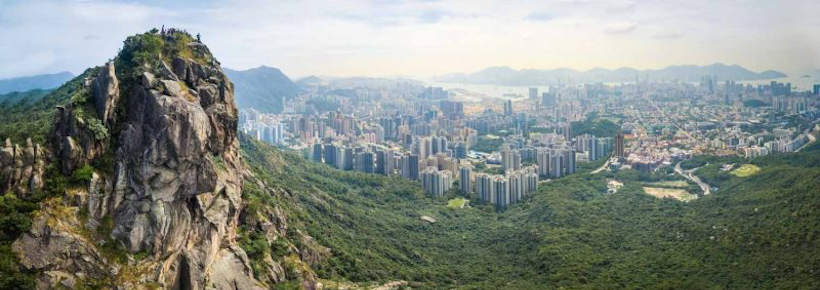
In mid-October, I was swiping through the news when a headline caught my eye: “RTHK’s Below the Lion Rock 2018 Season Opener to Revisit Causeway Bay Books Incident.” That may read like standard entertainment news, but it was anything but. RTHK – a government-financed channel – had adapted one of the most sensitive events in recent Hong Kong memory.

In 2015, five Hong Kongers went missing. They worked at Causeway Bay Books, a store known to sell tomes critical of China’s top leaders. One of men was allegedly taken from Hong Kong; if those accusations were true, it implied a violation of One Country, Two Systems, the principle supposed to guarantee Hong Kong a high degree of autonomy until 2047.