Q&A

The State of Chinese Sci-fi

In conversation with young author Fei Dao

When did you start writing science fiction?

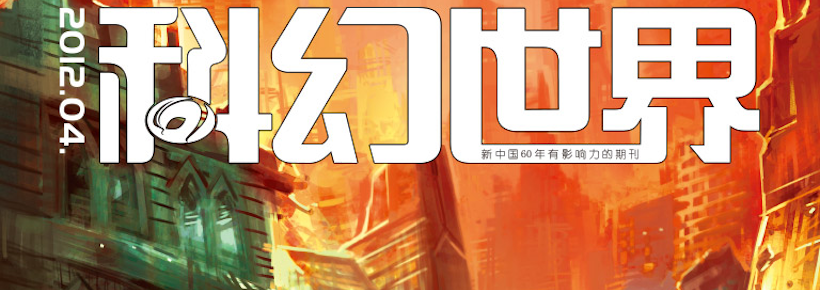
When I was at middle school, 16 or 17, I started to read a lot of sci-fi. I read the magazine Science Fiction World and became more familiar with sci-fi literature. I liked it because there was a lot of imagination and novelty in it. At that time, my dream was to become an author. When I started out, I didn’t think at all about writing science fiction. Back then I felt sci-fi was very difficult to write, and needed some knowledge of science, so I could only appreciate it but not write it myself.

Essays

Stranger than Science Fiction

Chinese sci-fi as a Trojan horse for social commentary – Alec Ash

This essay kicks off Sci-Fi Week at the China Channel. We’ll be featuring Q&As from two Chinese authors, as well as a couple of stories in translation. It’s the perfect excuse to go see The Wandering Earth in the cinema, or to pick up one of the recent collections of Chinese sci-fi stories to get acquainted with this fascinating and varied genre, the historical and political echoes of which are introduced below. – The Editors

In 1902, Lu Xun, the celebrated author of modern China, translated Jules Verne’s novel From the Earth to the Moon into Chinese from the Japanese edition. Science fiction, he wrote in the preface, was “as rare as unicorn horns, which shows in a way the intellectual poverty of our time.” In the same year, Liang Qichao, another reformist intellectual, in his unfinished novel Chronicle of the Future of a New China (新中國未來記), depicted a future in 1962 where the world came to admire China’s power at a global exposition in Shanghai (sounds familiar, albeit 50 years late). For both writers, exposing Chinese readers to sci fi was a way to promote new, scientific ways of thinking, and to drag the nation into modernity and out from under the yoke of the Qing Dynasty.

Borderlands

The Bard and the Bureaucrat

Keeping an epic alive on the Tibetan Plateau – Timothy Thurston

When he was 13, on the 15th day of the first of the summer months, one early morning as the cattle were spread out foraging on the side of Dzakyab Champa Taktse Mountain, in that holy place the birds and the bees were chirping and buzzing. Resting and listening lazily to a bubbling stream, he fell asleep. In his dream, he saw a white man with conch armor, a white horse with a turquoise mane. A loving smile appeared on his lips, and he said “Boy, I have an empowering jewel for you.” Then he seemed to open his chest with both hands placed light-filled volumes of books in his chest and closed it. He touched him three times with a vajra, and with a sharp voice, he said, “You, boy connected by karma, I’ve placed this highly auspicious jewel in your hands. May it bring benefit to all beings.” Having said this, he disappeared… From then on, he was able to tell the epic of King Gesar of Ling without difficulty.

Hidden History

How Japan Tried to Save Thousands of Jews from the Holocaust

The plan for a Jewish settlement in Japanese-occupied China – Kevin McGeary

A number of events have happened in the last few years to suggest that we might be returning to the 1930s, the last great period of darkness in Western political history. Yet a little-known tale from World War II involves a dispute between Japan and Germany, two of the 20th century’s biggest partners in war crime. Japan’s campaign to populate Manchuria with Jewish refugees, many of whom were fleeing the Nazis, was marketed as a humanitarian project, but many of the officials behind it would be executed as war criminals after Japan’s 1945 surrender. Its backstory is even more bizarre than the premise suggests.

Oolong Podcast

Writing About Chinese Genealogy

How Scott Tong rediscovered his family's roots

We’re delighted to bring a new feature to the China Channel: a series of podcasts hosted by Lev Nachmann, a PhD student at the University of California at Irvine. The podcast, titled Oolong, is produced with the sponsorship of the UCI Long U.S.-China Institute; each episode puts a China watcher on the interview chair, for a pithy and illuminating conversation about their background and work. In the first episode, Lev talks to Scott Tong (whom we also interviewed previously), author of the memoir A Village with My Name: A Family History of China’s Opening to the World in which he sought to uncover his family’s history in China, after working there as a reporter for many years. Scott currently reports about sustainability for NPR’s Marketplace. Hear about his pursuit, his family’s reaction, as well as his thoughts on being a reporter in China.