Essays

Naked and Famous

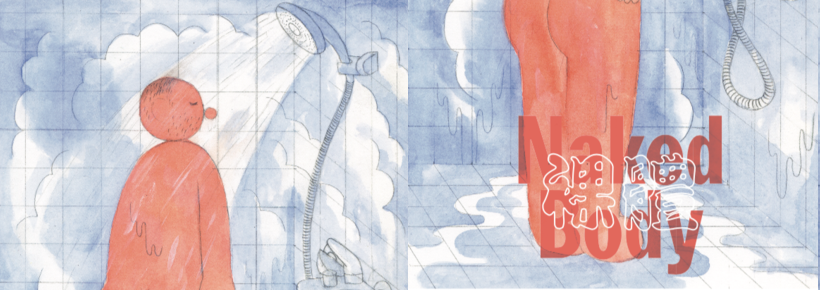
A comics anthology brings the birthday suits – Nick Stember

While the ongoing war of the words between the panicking, pusillanimous Pussy-Grabber in Chief and a certain belligerent billionaire has delivered no shortage of choice headlines (‘BEZOS EXPOSES PECKER’; ‘BEZOS COULD SUE THE PANTS OFF THE NATIONAL ENQUIRER’), I would be remiss not to point out the fortuitously-timed forthcoming publication of Naked Body: An Anthology of Underground Chinese Comics (although, because I can’t help myself: ‘JEFF BEZOS GOES HARD…’).

In just under two weeks, Orion Martin’s Paradise Systems, in collaboration with original publisher Yan Cong and Hong Kong cartoonist Jason Li, has raised $12,570 USD and counting (of an original $8,000 USD goal) in preorders and bonus pledges on Kickstarter – bringing some much-needed attention to this small press publisher of translated underground Chinese comics, while also earning it a place in the annals of Chinese folks going au naturel to prove a point.

Reviews

Three’s a Crowd

Ai Weiwei makes a splash in Los Angeles’ art world – Zandie Brockett

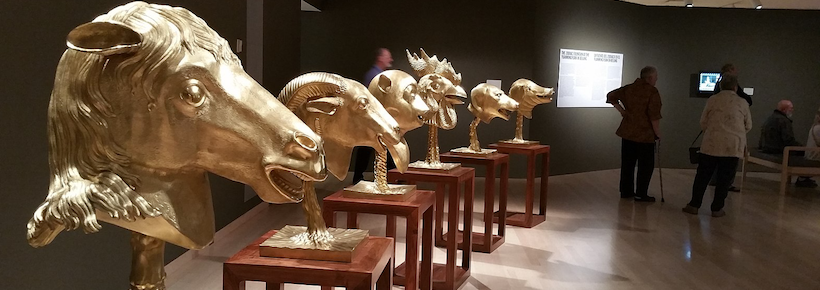
Cruising down Santa Monica Boulevard on a sunny fall day, palm fronds flashed across my sunroof just as Kanye and Kim made a brief appearance at a stoplight. It was a fitting start to a day of star-studded art hopping across three Angeleno exhibitions – Chinese artist Ai Weiwei’s new shows at Jeffrey Deitch’s brand new mid-city gallery, United Talent Agency (UTA)’s Beverly Hills Artist Space, and the Marciano Art Foundation, housed in the former LA Masonic temple.

Riding on the coattails of Ai Weiwei’s first Hollywood-produced feature film, Human Flow (Participant Media, 2017), the three exhibitions continue his inquiry into the global refugee crisis. 

Essays

The “Bots” of Weibo

How fake automated Chinese social media accounts are being used as a Trojan horse for dissent – Bai Mingcong

On October 21, 2018, an account named ‘People’s Daily bot’ (@人日bot) posted this message on Weibo:

They fear the empowerment of the people, fear that the people shall see the true face of our era, and further yet, they fear that their vice shall be exposed in front of the masses! (他们害怕人民翻身,害怕人民认识大时代的真面貌, 更害怕他们自己的丑恶暴露在人民大众面前!)

Taken at face value, the account appears to directly and forcefully target the Chinese regime. Puzzlingly, by the time of publication, the post has yet to be removed, and the account has not been banned, as usually happens to dissenting social media in China. Yet a closer look reveals that this is a repost of a 1946 editorial from the People’s Daily, the central mouthpiece of the Chinese Communist Party, that criticized the treatment of journalists in the Nationalist “occupation zone” as contrasted with the communist “liberated zone” under CCP control. The survival of the post in the face of hardening censorship is not a loosening of the cords. Instead, it is representative of a new trend on the Chinese internet, in which Weibo accounts purporting to be bots hide their criticism of the government behind prominent and often politically unassailable figures of modern China.

Essays

Disappeared Forever?

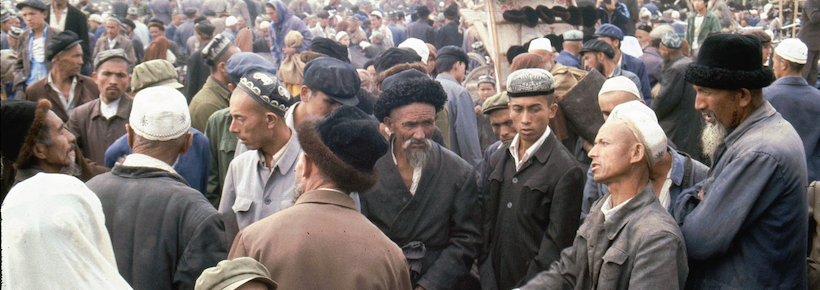
The persecution of Uighur intellectuals – Henryk Szadziewski

I was raised in the UK by parents who survived the Nazi occupation of Poland. I grew up hearing their stories of fear and deprivation. My father spent time in a German internment camp, with only threadbare clothes to protect him from the freezing cold. Decades later, even on mildly cold days, he would put several pairs of socks on his feet to keep the chill at bay. It was a persistent reminder of his severe experiences as a young man. I didn’t understand the lasting psychological and physical impacts of internment.

My parents were fortunate. They survived and rebuilt their lives. Members of their family and community, and millions of people in Poland including the educated elite, did not share this fate. In 1939, the Nazis implemented ‘Intelligenzaktion,’ a policy that singled out Poland’s intelligentsia. Selected people were targeted, disappeared and murdered. The aim was not only to ‘cleanse’ the newly conquered territory, but also to wipe out any source of opposition to Nazi rule. Professor Jan Pakulski writes that these ‘eliticides’ resulted in the “formation of a politically dependent and socially deracinated ‘quasi-elite’ with limited capacity for governing.”

Little Red Podcast

Keeping the Faith?

Xi's deal with the Holy See

The Vatican and China have signed a deeply controversial agreement on the appointment of bishops, ending the cold war that has frozen ties since 1950. That deep freeze led to schisms between the official and underground churches, with some clergy persecuted for decades and the church refusing to recognize Beijing's handpicked bishops. But the new agreement has divided the faithful yet again, with some fearing Catholicism is facing calamity as President Xi Jinping tightens control over religion. To explore what’s behind this sudden rapprochement and what it could mean for China’s 12 million Catholics, Louisa and Graeme are joined by Jeremy Clarke, a former Catholic priest who has researched China's historical relations with the Holy See.