Reviews

What Xi Thinks

Tanner Greer reviews Inside the Mind of Xi Jinping by François Bougon

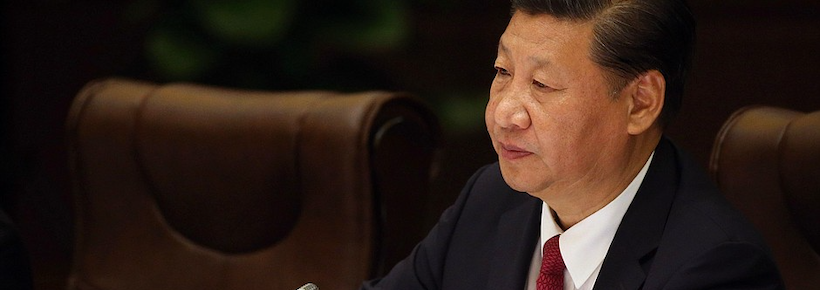
General Secretary Xi Jinping is a Chinese renaissance man. Self-assured, self-possessed and utterly unflappable, Xi appears equally at home on the hearths of struggling farmers and in the greeting halls of foreign capitals. State media likes to juxtapose the years he spent in the caves of Shanxi with the months he spent governing Shanghai's glittering towers. Here is a man as men should be: a leader who can grasp both the plow and the bond market.

Though Xi majored in chemical engineering, he presents himself as a litterateur. When in Russia, he peppers his speeches with the words of Dostoevsky and Golgol; when in France, of Molière and Maupassant. To better understand the meaning of The Old Man and the Sea, Xi traveled to Hemingway's favorite bar in Havana. Xi has a hankering for historical sites like these, especially those associated with famous scenes from the stories of Chinese antiquity. He cultivates a reputation for taking history seriously; his speeches are filled with allusions to obscure sages and statesmen from China's past.

Reviews

Politicians and Poets

John Gittings reviews two new books on the Chinese Revolution

In June 1959 Mao Zedong returned to Shaoshan, his home village in Hunan province, for the first time in over thirty years. He was there to find out what the local farmers really thought of the Great Leap Forward – his policy intended to leapfrog China’s countryside into the future, which backfired disastrously leading to a three-year famine from 1959-1962. After visiting his parents' grave, Mao threw a dinner for the village elders and local cadres, and could not help noticing how hungrily they fell upon the food. Then came the complaints – cautious at first but soon spilling out furiously. The wasteful public mess-halls, the orders to plant crops too close, the useless backyard furnaces, and above all the lack of food.

Reviews

Four Young Chinese Artists, 25 Years On

Richard Kraus looks at two documentaries on Chinese art by Lydia Chen

In her spellbinding 1993 documentary Inner Visions, Lydia Chen interviewed three struggling, idealistic young Chinese artists. Twenty-five years later, the same profilees are back in Chen’s latest film, Art in Smog, to discuss their careers again – this time as mature artists who worked hard to find their places in China’s now prosperous arts scene. Chen’s long-term relationship with them is unique, and makes for two very special documentaries which anyone who cares about the evolution of Chinese art over the past quarter century should watch.

Essays, Reviews

Are the Confucius Institutes a Trojan Horse?

A documentary and an academic roundtable renew the debate – Frank Beyer

The amount of recent news in New Zealand and Australia about China’s influence in the region has been overwhelming. One of the threads, downunder and elsewhere, has been the Confucius Institutes – specifically, whether they are a Trojan Horse for Chinese state influence abroad. A dramatic and accessible entry into this debate is Doris Liu’s film In The Name of Confucius (2017), an exposé on the controversial presence of these Chinese language and culture centres that partner with universities all over the world – based on campus but funded by the Chinese state through the “Office of Chinese Language Council International” known as Hanban, affiliated with the Chinese Ministry of Education.

Reviews

The Thugs of Tiananmen

Grace Jackson reviews Bullets and Opium by Liao Yiwu

“Thugs” was how Hong Kong Police Commissioner Stephen Lo described demonstrators who gathered in historic numbers on June 9 to protest against a bill that would allow for extradition to China, at the outset of a wave of protests that have roiled the city ever since. That word is one of several threads connecting Hong Kong in 2019 to Beijing thirty years earlier. Prior to this year, the last time Hong Kongers took to the streets in such numbers was in solidarity with the student protestors who gathered in Tiananmen Square in 1989. In the aftermath of that democracy movement in Beijing, “thugs” (baotu 暴徒) became a buzzword too. It was the PRC government’s designation for all non-student protestors: the workers, shopkeepers and bystanders who felt compelled to put their bodies between soldiers and students.