Reviews

Rewriting History

Ting Guo reviews Women and China’s Revolutions by Gail Hershatter

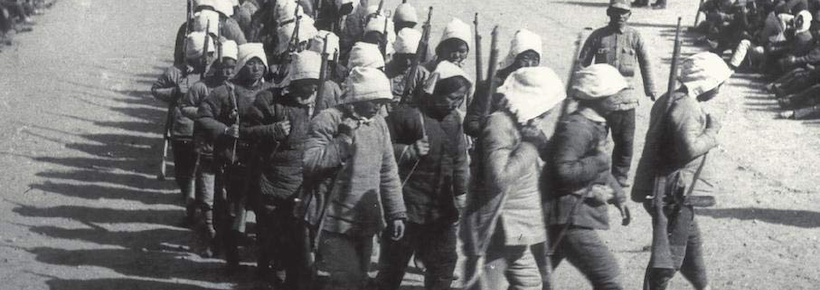
Despite its revolutionary and socialist origins – as women in the garment industry marched through New York City in 1908 demanding shorter hours, better pay and voting rights – International Women’s Day on March 8 has become a rather commercial holiday in many places around the world. That includes China, my socialist motherland. Taobao, the world’s biggest e-commerce website, uses the day as a shopping festival, and was able to hit 30.8 billion yuan (approximately $4.5 billion) in gross sales for women’s fashion, accessories and cosmetics in 2017. This year, however, a 1949 speech delivered by the socialist writer Ding Ling (1904-1986), a winner of the Stalin prize for literature in 1951, went viral on Weibo.

This speech, entitled ‘Thoughts on 8 March’, was delivered in the Communist heartland of Yan’an on August 3, 1949, a few months before the founding of the People’s Republic of China. As Ding Ling wrote:
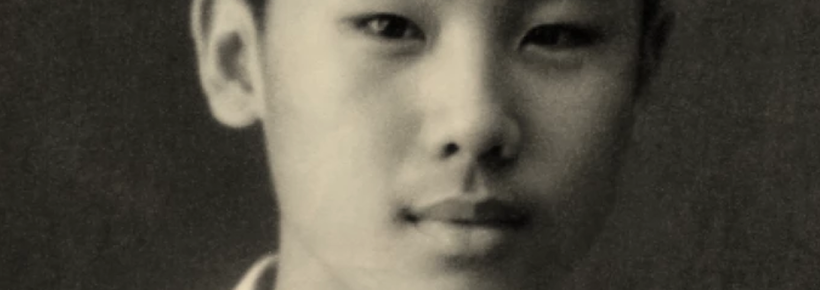
“Aware, modern women should identify and cast off all their rosy, compliant illusions. Happiness is to take up the struggle in the midst of the raging storm and not to pluck the lute in the moonlight or recite poetry among the blossoms.” 

Reviews

Home is Everywhere

Rachel Leow reviews Home Is Not Here by Wang Gungwu

“No matter where you live in the world, we all share one origin. There is a place for all of you here at home.”

In so many words, this is the single message which the People’s Republic of China’s Overseas Chinese Office (Qiaoban) channels to ethnic Chinese across the world. It is a relatively new sentiment. The idea that ethnic Chinese of foreign nationality (huaqiao) are not ‘blood traitors’ (hanjian) but patriots-in-potentia – talent (rencai) to be lured ‘back home’ to contribute to China’s wealth and power – has not long been in gestation. But since the 1980s, it has been written with ever more depth into the PRC’s long-term visions. Conceived under the KMT and established by the new PRC in 1949, the Qiaoban languished in the Cultural Revolution and was revived by Deng Xiaoping, who saw in the huaqiao a source of support for reform and opening. 

Three decades later, Xi Jinping’s ‘China Dream’ counts huaqiao, not just Chinese citizens, among its dreamers; his One Belt One Road strategy is designed with huaqiao in mind, as business collaborators with critical local knowledge. 

Reviews

Bringing Political Science to the Taiwanese Masses

Lev Nachman talks to Yen Wei-ting, founder and contributor to the blog and book, “Who Governs?”

菜市場政治學 – literally “Food Market Political Science,” or its official English name “Who Governs?” is a blog and a book that translates ivory-tower political science concepts into easy, understandable language for a Taiwanese audience. Originally, the blog was started by professor Yen Wei-Ting who, at the time of the blogs' founding, was a graduate student. 

Reviews

Pulling Punches

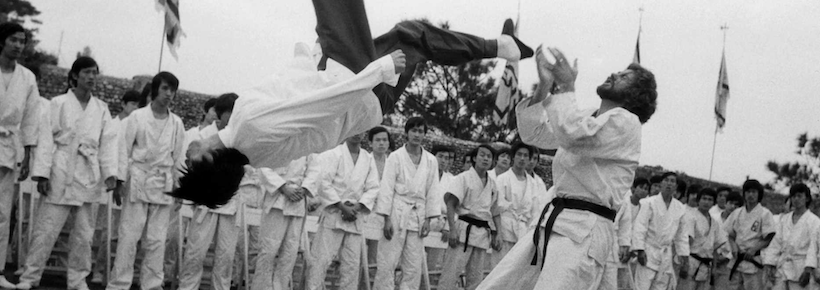
Yifu Dong reviews a new biography of Bruce Lee

Today it takes most people quite a bit of imagination to see traditional Chinese martial arts – kung fu – as an effective style of fighting. Back in my Beijing secondary school, my classmates and I learned kung fu routines alongside calisthenics, as part of daily exercises. We swung our fists and kicked our legs simply for the sake of stretching. On Chinese TV, kung fu dazzles, but everyone knows what happens in real life when half a dozen enemies encircle a solitary fighter. In recent years, Chinese mixed martial arts (MMA) fighters challenged kung fu masters, and almost every fight ended within seconds with the man of tradition lying on the floor, or bleeding, or both. Even Shaolin Temple, a soi-disant holy site of kung fu in Henan province, has evolved into a commercialized tourist trap.

Reviews

Crossing Borders

Cameron White reviews The Crossing, a new film of Hong Kong

Hong Kong has reached boiling point. In June and early July, millions of young residents took to the streets, protesting a proposed law that would allow extraditions to mainland China. They say the change would undermine One Country, Two Systems, the doctrine supposed to guarantee Hong Kong a high degree of freedom in an otherwise authoritarian country.

One Country, Two Systems was first proposed by Deng Xiaoping as a theoretical model for merging mainland China and Taiwan. The vision: separate legal and economic frameworks could allow disparate regions to coexist within a single, unified China. While never implemented in the context of Taiwan, the model was used to reintegrate Hong Kong in 1997. Since then, perceived violations of that arrangement have been at the heart of nearly every major public demonstration in Hong Kong, including the 2003 protest against national security legislation, the 2012 protest against national education, the 2014 protests against Beijing’s proposed election reform package, and the 2019 protests against the extradition law.