Dispatches

The Hungry Ghosts of June Fourth

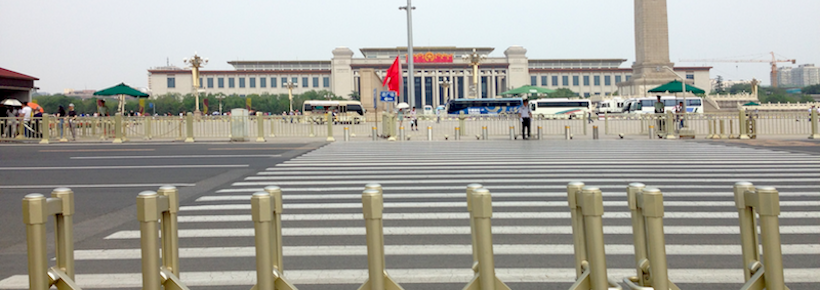
Concrete and memory is all that is left on Tiananmen Square Alec Ash

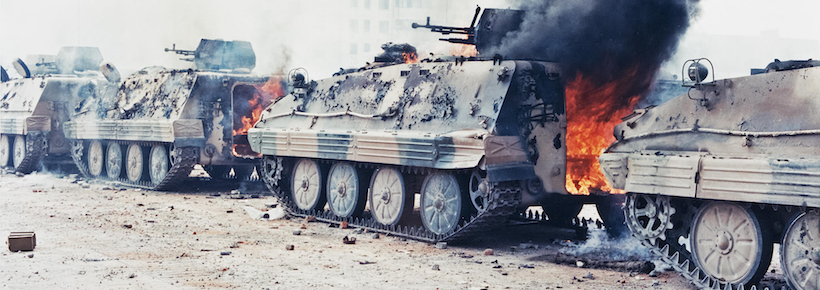
A hungry ghost, or e’gui 饿鬼, is the lingering spirit of a person who has met a violent or miserable end. In Buddhist tradition, it is the evil deeds of the individual which lead them to be reborn as a hungry ghost, below even the lowest of animals. But in more popular belief, the cruel end of a life cut short is enough to leave a ghost unanchored, unable to rest in peace, forever hungry, never sated.

On the night of June 3, 1989, paramount leader Deng Xiaoping sent some 200,000 troops into Beijing and created anywhere from several hundred to several thousand hungry ghosts. That we don’t know the precise number – likely something less than 3000, despite recent claims of 10,000 or more – is only a testament to the efficacy of the cover-up. If the human tragedy of it all feels too far removed geographically or generationally (I was three in 1989), videos and pictures remind us of what we were not there to witness.

Little Red Podcast

Tiananmen’s Final Secret

Explosive new information revealed at Tiananmen's 30th birthday

AN EPISODE OF THE LITTLE RED PODCAST

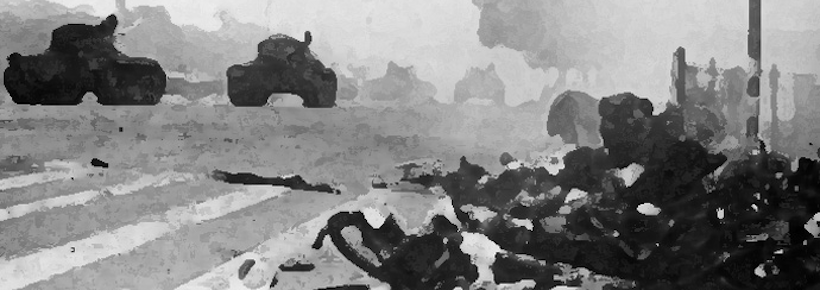
Tuesday June 4 marked the 30th anniversary of the deadly crackdown ordered by Deng Xiaoping, which killed hundreds – maybe thousands – of people in Beijing and Chengdu. While the campaign to erase all memory of the event continues, explosive new information has emerged in the lead up to the anniversary.  It reveals new details about resistance to the crackdown among the military and how the Communist Party managed the aftermath of Tiananmen. Former student leaders Wang Dan and Zhou Fengsuo as well as the publisher of The Last Secret, Bao Pu and Joseph Torigian of American University join us in this episode to discuss these revelations and what life is like in exile for the student leaders. Click through to listen to the podcast episode:

Excerpts

The Morning After

A Beijinger remembers the Tiananmen crackdown – Anna Wang

The morning after, Radio Beijing reported the Tiananmen Massacre.

Years later, a friend of mine told me that as he listened to the broadcast, he pulled his curtains tight and hid in the pitch black of his room. Rumor had it soldiers would open fire on any sign of life. Even a flick of a light switch could get you killed. He kept his radio as low as possible.

This is Radio Beijing. Never forget June 3, 1989: the most tragic event in the history of the nation’s capital.

Radio Beijing was a shortwave station. Its signal was easily scrambled by electronic interferences. Machines in neighboring factories, streetcars, combustion engines, and even desk lamps could distort the signal. But that morning, the city lay in darkness, and nearly all modern conveniences stopped functioning. The sound of Radio Beijing was crystal clear.

Tears rolled down my friend’s face.

Reviews

The Beijing Spring

James Carter on Khiang Hei’s Tiananmen exhibition at Zimmerli

The images on display in Khiang Hei’s new photo exhibition, at Rutgers University’s Zimmerli Art Museum in New Brunswick, New Jersey, are uncomfortable to look at. Not because of the images themselves, which depict the 1989 student protests in Tiananmen Square. Full of color and spectacle, many of Hei’s images taken before the crackdown on June 4 evoke a sense of excitement, even optimism. Some are grim and bloody, but most of them are not. They show students gathered behind banners declaring support for principles such as democracy and free expression, or identifying their universities or departments. Often they are laughing, smiling, even dancing. Some carry small children, or flash the “peace/V-for-victory” sign.

Translation

Lessons in the Law

Campus awakenings in Beijing – by Xie Ding, translated by Natascha Bruce

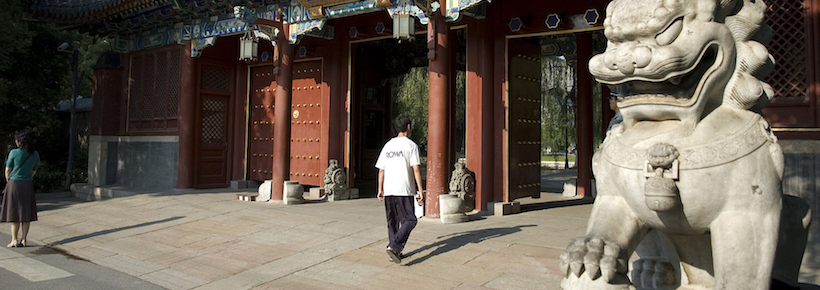
In fall 2003, around midday every Wednesday, I used to bike from the Wan Liu dorms over to class on the Peking University (Beida) campus. I was always in a rush, a little on edge.

It had been a tense year. First came SARS, which kept us all cooped up in the dorms. Then I caught a cold and was whisked off to a guest house in the southwest corner of campus, where I spent days quarantined in a tiny room, contemplating mortality. Then the new term started. We forgot about the upheaval we’d just been through. Our lives had ground to halt during the SARS outbreak and then, just like that, we put it all behind us. The same would soon be true of those leisurely hours spent in study and contemplation – just like that, graduation and job hunting would come to replace them. It was my final year at Beida. I selected a few courses at random, to make up credits. At the time, Zhao Xiaoli was a lecturer, teaching a course called ‘The History of Western Legal Thought.’