Essays

Stranger than Science Fiction

Chinese sci-fi as a Trojan horse for social commentary – Alec Ash

This essay kicks off Sci-Fi Week at the China Channel. We’ll be featuring Q&As from two Chinese authors, as well as a couple of stories in translation. It’s the perfect excuse to go see The Wandering Earth in the cinema, or to pick up one of the recent collections of Chinese sci-fi stories to get acquainted with this fascinating and varied genre, the historical and political echoes of which are introduced below. – The Editors

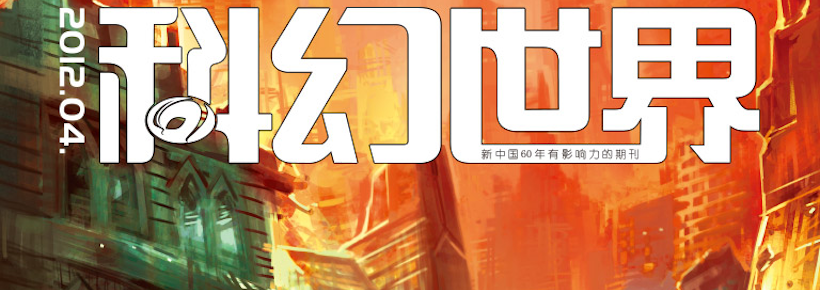
In 1902, Lu Xun, the celebrated author of modern China, translated Jules Verne’s novel From the Earth to the Moon into Chinese from the Japanese edition. Science fiction, he wrote in the preface, was “as rare as unicorn horns, which shows in a way the intellectual poverty of our time.” In the same year, Liang Qichao, another reformist intellectual, in his unfinished novel Chronicle of the Future of a New China (新中國未來記), depicted a future in 1962 where the world came to admire China’s power at a global exposition in Shanghai (sounds familiar, albeit 50 years late). For both writers, exposing Chinese readers to sci fi was a way to promote new, scientific ways of thinking, and to drag the nation into modernity and out from under the yoke of the Qing Dynasty.
Essays

Living MoreFree

China’s streetball hero plays his way – Eduardo Baptista

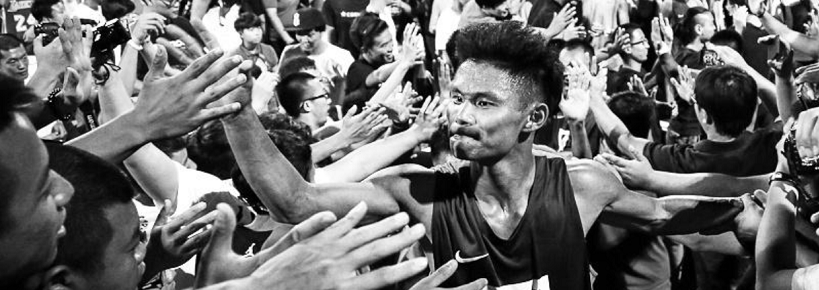
On a mid-September afternoon, Wu You (吴悠) a.k.a. MoreFree, one of China’s most notorious basketball icons, was getting beaten badly. Despite the giant posters foregrounding the court and cameras filming Wu’s every move, this was only an informal exhibition game; Wu’s teammates included his childhood friends and their relatives, many of whom hadn’t exercised in months, let alone play a competitive game. As his team, down 20 points against a well-drilled team from the PLA National Defense University, called yet another timeout,Wu sat down on the bench, staring into space as everyone else chattered over tactics. Next to him, two of his septuagenarian teammates lit cigarettes, leaning back languidly and taking long drags. His team short on manpower, Wu tried to put them on his back for the final quarter, but to no avail – they lose by 30.

In China, the name “Wu You” has long been synonymous with “streetball,” or jieqiu (街球). The naughty younger brother of association basketball, streetball originated in the outdoor courts of America’s inner cities. The objective is not so much to outscore your opponent but to out-humiliate him, whether “breaking their ankles,” where a change of direction sends a defender flying to the ground, or inflicting a brutal “posterizer,” a dunk that rams the defender’s body backwards. At NBA games, spectators for the most part cheer and clap for their teams; streetball crowds are much less civilized, screaming in excitement whenever a player is embarrassed, even running onto the court.

Essays

The American Spirit behind China’s New Silk Road

US-Chinese cooperation and the dream of a global railroad – Matthew Ehret

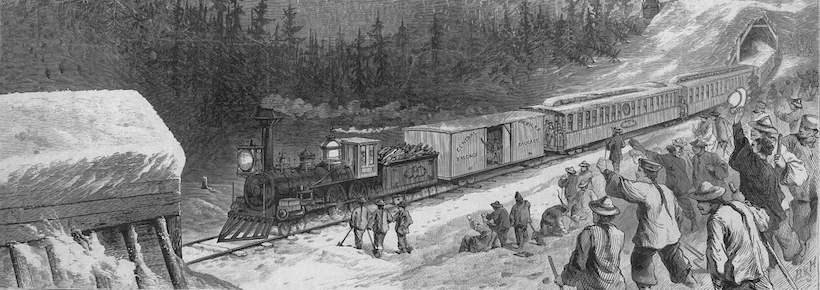
Until recently, the Chinese role in building America’s transcontinental railway was nearly written out of history. It was only in 2014 that the US Department of Labor inducted the Chinese railway workers into the Hall of Honor, officially recognizing for the first time the vital role and sacrifice of the Chinese, whose numbers amounted to over 15,000 workers at the peak of the project’s construction – 90% of the total Central Pacific Railway workforce.

Essays

Naked and Famous

A comics anthology brings the birthday suits – Nick Stember

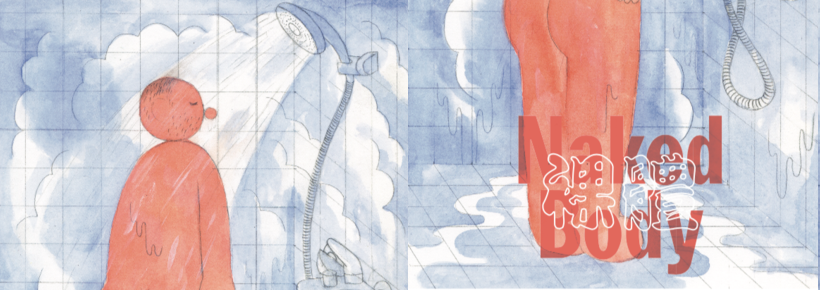
While the ongoing war of the words between the panicking, pusillanimous Pussy-Grabber in Chief and a certain belligerent billionaire has delivered no shortage of choice headlines (‘BEZOS EXPOSES PECKER’; ‘BEZOS COULD SUE THE PANTS OFF THE NATIONAL ENQUIRER’), I would be remiss not to point out the fortuitously-timed forthcoming publication of Naked Body: An Anthology of Underground Chinese Comics (although, because I can’t help myself: ‘JEFF BEZOS GOES HARD…’).

In just under two weeks, Orion Martin’s Paradise Systems, in collaboration with original publisher Yan Cong and Hong Kong cartoonist Jason Li, has raised $12,570 USD and counting (of an original $8,000 USD goal) in preorders and bonus pledges on Kickstarter – bringing some much-needed attention to this small press publisher of translated underground Chinese comics, while also earning it a place in the annals of Chinese folks going au naturel to prove a point.

Essays

The “Bots” of Weibo

How fake automated Chinese social media accounts are being used as a Trojan horse for dissent – Bai Mingcong

On October 21, 2018, an account named ‘People’s Daily bot’ (@人日bot) posted this message on Weibo:

They fear the empowerment of the people, fear that the people shall see the true face of our era, and further yet, they fear that their vice shall be exposed in front of the masses! (他们害怕人民翻身,害怕人民认识大时代的真面貌, 更害怕他们自己的丑恶暴露在人民大众面前!)

Taken at face value, the account appears to directly and forcefully target the Chinese regime. Puzzlingly, by the time of publication, the post has yet to be removed, and the account has not been banned, as usually happens to dissenting social media in China. Yet a closer look reveals that this is a repost of a 1946 editorial from the People’s Daily, the central mouthpiece of the Chinese Communist Party, that criticized the treatment of journalists in the Nationalist “occupation zone” as contrasted with the communist “liberated zone” under CCP control. The survival of the post in the face of hardening censorship is not a loosening of the cords. Instead, it is representative of a new trend on the Chinese internet, in which Weibo accounts purporting to be bots hide their criticism of the government behind prominent and often politically unassailable figures of modern China.