Essays

Could Taiwan Today Be Mainland China Tomorrow?

The shifting river of Chinese politics – Scott Savitt

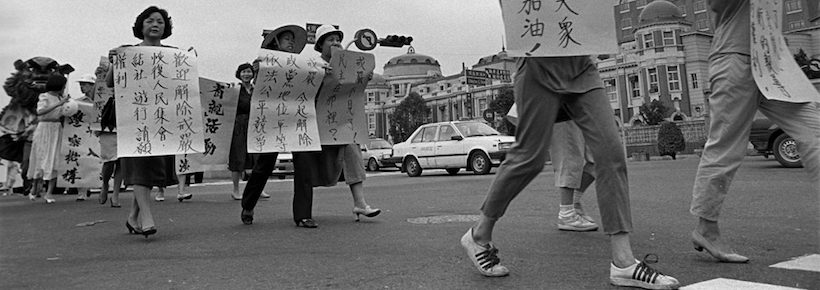
There is a Chinese proverb: “The Yellow River shifts course every 30 years – three decades east, three decades west – and with it the fortunes of those who live alongside it” (Sanshi nian he dong, sanshi nian he xi 三十年河東, 三十年河西). People say this to comfort each other in times of trouble, the equivalent of “this too shall pass.”

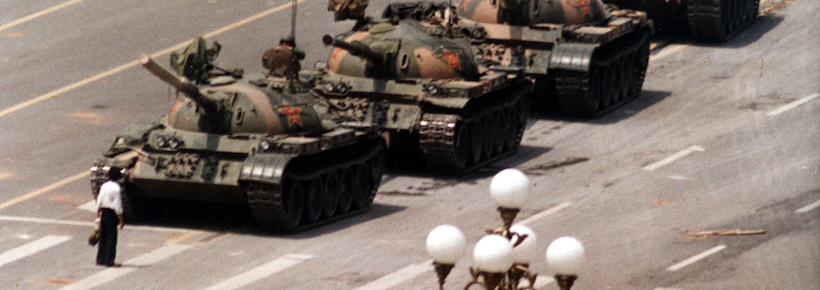
Thirty years ago I was a Beijing-based correspondent in my early twenties, covering the student-led democracy protests in Tiananmen Square and subsequent military crackdown. Those seven weeks of peaceful, celebratory protests were the most hopeful experience of my life, and the slaughter I then witnessed on the Avenue of Eternal Peace the most traumatic. I watched as the army fired machine guns and plowed tanks into crowds to carry out their order to clear Tiananmen square before dawn.
Essays

China’s True Legacy of 1989

How the Tiananmen Square protests led to the new China Model – Klaus Mühlhahn

The Chinese leadership is nervous. With great apprehension over the last few weeks, it has been watching the approach of the 30th anniversary of the Tiananmen Square protests, which happened without great incident on Tuesday. The dramatic tightening of political control, and the harassment and detainment of government critics, undoubtedly has its origins in the fears surrounding the June Fourth anniversary.

The intoxicating months of spring 1989 on Tiananmen Square, and the abrupt, brutal crackdown by the Chinese military that followed, remain at the forefront of China’s collective memory, despite substantial attempts to censor and repress. The horrible loss of life and violent suppression of democracy will not soon be forgotten. More than a tragic, historic moment, though, the June Fourth massacre marked the decisive and fundamental shift towards the China we know today: a China that has been pushed towards the embrace of authoritarianism and state capitalism. Over the last 30 years, this model has proved much more successful and resilient that most observers had assumed.

Essays

Father of the Chinese Railway

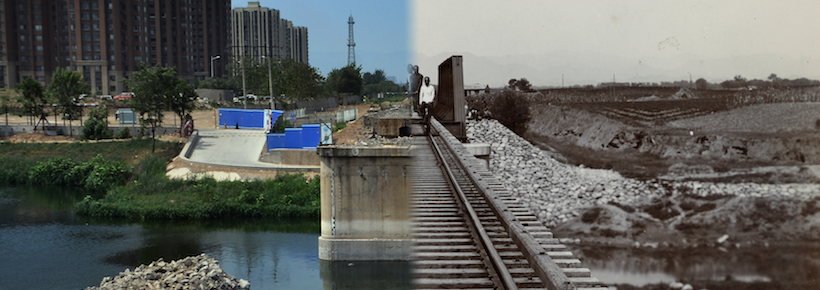
Remembering Zhan Tianyou, China’s pioneer railway engineer – Thomas Bird

This February, the state-owned China Railway Corporation inaugurated the Year of the Pig by announcing railway spending in the region of 800 billion yuan in 2019. While the UK and USA watch their antiquated railway lines crumble, the Communist Party of China views railway development as a core project both at home – sewing the vast territory of the People’s Republic together – and abroad, providing transport infrastructure in places as diverse as Laos and Kenya as part of President Xi Jinping’s Belt and Road Initiative (BRI).

Critics see China’s plans as semi-colonial, with tracks in Tibet and Xinjiang part of a broader placation program, while one-sided contracts in the BRI endebt poorer countries to China. China’s grand railway schemes also trouble economists, who see railways being built simply to stimulate economic growth while China Railway Corporation has, itself, a multi-billion yuan debt.

Essays

Belgrade to Beijing and Back Again

The 1999 Chinese embassy bombing, revisited – Sale Lilly

Warheads on Foreheads. I suspect that locution – a coarse motto of American military targeting cells – is as unfamiliar to Chinese history students as a Chinese idiom might be to American military personnel. The phrase implies that American bombs fall squarely on their intended target, and nowhere else. But that has not always been the case. May 7, 2019 marks the 20th anniversary of the US bombing of the Chinese embassy in Belgrade, Serbia. Three Chinese citizens died in the bombing, itself a part of a much larger military and diplomatic campaign led by the US to compel the Yugoslav government to cease hostilities in Kosovo. The US characterized the strike in sterile terms as “an error” and a targeting “anomaly.”

The Chinese government unequivocally disagreed, and claimed the strike was an intentional act of American malice. The bombing generated a crisis in Sino-American relations and a related protest movement across China. The same weekend of the strike in 1999, I was busy thumbing through stacks of promotional military pamphlets from the US military.

Essays

May Fourth for the World

China's May 4th 1919 protests envisaged as a national and international movement – Shakhar Rahav

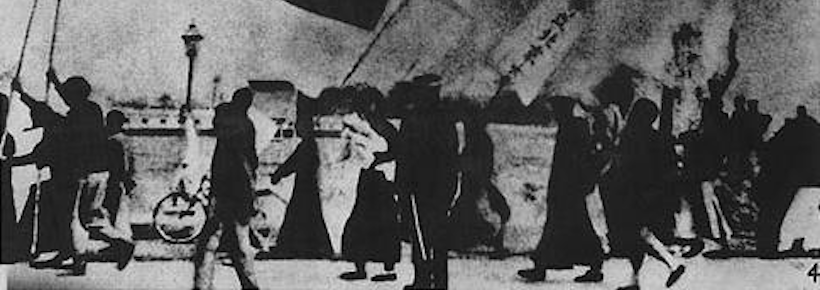
On 4 May 1919 approximately 3000 students from over a dozen institutions took to the streets of Beijing to protest news that the Paris peace conference was rejecting Chinese demands to force Japan to cede control over territories it held in Shandong Province. The term “May Fourth” or “May Fourth Movement” has become an icon in Chinese history, and has come to denote that demonstration and those that followed, including a general strike that paralyzed Shanghai that June. The term is also routinely used in a broader chronological sense: to invoke the entire period of cultural and political unrest that lasted from 1915 until 1923. In both cases Beijing and Shanghai are usually the focus of attention.  My argument here, though, is that just as it May Fourth’s significance lies in the events of more than one or two months, it also involves more than just one or two places. A broader geographical as well as temporal perspective is needed.