Essays

A Madman’s End

Geremie Barmé and Liu Xiaobo remember Li Ao

It is impossible to describe the exhilaration I felt upon reading Li Ao’s A Monologue on Tradition (獨白下的傳統) when it first appeared in 1979. At the time, I was working for The Seventies Monthly (七十年代月刊), a prominent Chinese-language magazine edited by the noted Hong Kong journalist Lee Yee (李怡). After years studying in late-Maoist China immersed in the works of the Great Helmsman #1 and stilted Party prose, the initial shock of Hong Kong’s cultural richness was immense. The British Crown Colony was the entrepôt of the Chinese multiverse, one where traditions from before 1949 and the world of that ‘Other China’ Taiwan were as freely accessible as the cloaked realm of the People’s Republic of China.

And then there was Li Ao, whose prose, and his ideas, were liberating, scintillating and, after my time on the Mainland, bracingly scandalous. I was soon surreptitiously ferrying copies of A Monologue on Tradition, a collection of essays on history and the Chinese national character, to friends in Beijing, Shanghai and Guangzhou. Around that time I launched my own writing career as a Chinese essayist (one which lasted from the late 1970s until the early 1990s); Li Ao, among others writers, was both a challenge and an inspiration. Li Ao died on 18 March this year, but for many of his past admirers Li’s real end came in 2004. His passing gives us pause to consider his plangent fate.

Essays

Storyteller-in-Chief

Vanity publishing with Chinese characteristics – David Bandurski

To Xi Jinping’s growing list of titles as Chairman of Everything for Life, add one more: Storyteller-in-Chief. In the five years since he became general secretary of the Chinese Communist Party in November 2012, Xi has authored no less than four books, including The Governance of China (the two-volume tome on his ruling vision that Facebook’s Mark Zuckerberg made such a show of placing on his desk), Up and Out of Poverty (a collection of his writings through the 1990s), The Chinese Dream and the Great Rejuvenation of the Chinese Nation (which helps readers “come to understand the true nature of the Chinese Dream”), and the tenderly titled Knowing Deeply: Loving Keenly (a book of his writings from the early 1980s).

Essays

Liberal Confucianism

Yan Xuetong’s qualified acknowledgement of liberalism – Sam Crane

For many years the Chinese Communist Party has identified “Western values,” including various manifestations of liberalism, as a threat to political and social stability in the People’s Republic.  From the 1983 movement to “eradicate spiritual pollution,” through repeated jeremiads against “bourgeois liberalization” and “peaceful evolution,” to more recent efforts to promote “socialist core values,” Party leaders have consistently attacked liberalism as a “hostile foreign force.” All the while, they attempt to appropriate and redefine certain liberal values – freedom, democracy – to support the illiberal authoritarianism that sustains their power.

It was somewhat surprising, then, to read Tsinghua University Professor Yan Xuetong’s recent article: ‘Chinese Values v. Liberalism: What Ideology Will Shape the International Normative Order?’ The “v.” in the title suggested a reiteration – perhaps a more sophisticated one, given Yan’s academic pedigree – of the usual anti-liberal diatribe. But instead of uncompromising condemnation or distorted appropriation, Yan recognizes the power of liberalism at the level of international relations, and advances tentative ideas for a reasonable accommodation between traditional Chinese values and liberal ideals.

Essays

Can the Chinese Communist Party Learn from Chinese Emperors?

Lessons from history for Xi Jinping – Yuhua Wang

In 1912, at the age of 19, Mao Zedong’s high school teacher gave him a book that became his lifelong favorite. He read it during the Long March, in his cave house in Yanan, and during his train rides across China. A copy of the book could always be found on his bedside table so he could read it before sleep. He told people that he had read it seventeen times, and he frequently referred to the book during conversations with Party officials.

The book is Comprehensive Mirror in Aid of Governance, which was edited by Sima Guang, an intellectual and politician in the Northern Song dynasty, and published in 1084. It is a 294-volume, three-million-word chronological narrative of China’s history from 403 BCE to 959 CE. The emperor asked Sima to write this book to examine the lessons learned from previous emperors, so that future emperors could learn from them, avoid their mistakes, and become better rulers.

Essays

Everything Under Heaven

Howard French on China’s geopolitical ambitions

There was once a country at the very center of the world, whose position was recognized as such by peoples both far and wide. Today, we call that country China.

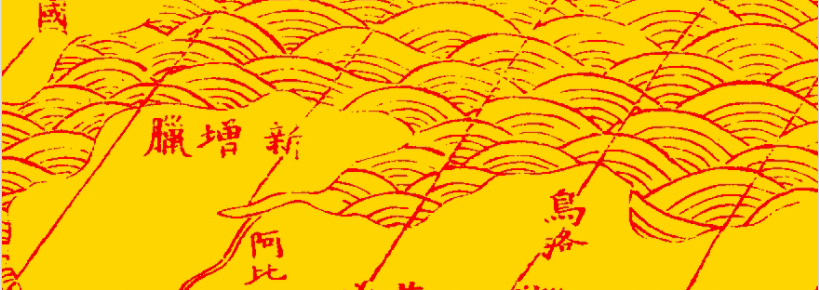
Using the very word “country” is actually deceptive. The nation that we now instantly identify on the map as China hasn’t existed long. Throughout most of its history this dynastically ruled land would not even have recognized itself as a country, let alone seen its neighbors as such. It was an empire, and a largely borderless one, both in its geographical form and in what it considered to be the relevance or applicability— what the French would call the rayonnement of its ideas. One could argue that there has never been a more universal conception of rule. Practically speaking, for the emperors of the Central Kingdom, this place we call China, the world could be roughly divided into two broad and simple categories, civilization and non-civilization, meaning the peoples who accepted the supremacy of its ruler, the Son of Heaven, and the principle of his celestial virtue, and those who didn’t— those who were beyond the pale.