
Chinese Literature Podcast

It’s the End of the World as We Know It

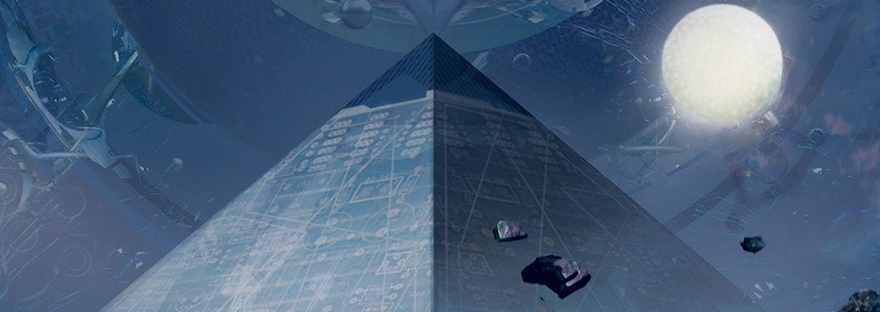
Rob Moore and Lee Moore unpack Liu Cixin’s Three-Body Problem

In the first of a new partnership with the Chinese Literature Podcast, brothers from another mother Rob Moore and Lee Moore take a break from Li Bai and Du Fu to look at Liu Cixin’s three-part science fiction epic. First serialized in Science Fiction World in 2008, The Three Body Problem became a global phenomenon when it was published in English translation by Ken Liu and Joel Martinsen. In the podcast, Rob and Lee discuss the main event of the first book (rhymes with ‘vulnerable elocution’) and share student responses, before highlighting the age-old divide between official popular and official literature in China:

Little Red Podcast

Lies, Damn Lies and Police Statistics

Crime and the dark side of the Chinese Dream – by Louisa Lim

LISTEN TO THE PODCAST EPISODE

There was once a time when Chinese towns got rich producing a single cheap commodity such as the zip, the cigarette lighter or the humble button. In some parts of China, the model remains the same but the product is crime. Criminal villages – fanzui cun – are emerging, showing a darker side of Xi Jinping's Chinese Dream.

China History Podcast

The Five Elements

The ninth and final part in the History of Chinese Philosophy podcast series

Laszlo emerges from the post-holiday festivities to finish off the series, picking up from last episode with the life and work of Wang Yangming. The differences between the two main schools of Neo-Confucianism is further discussed: the Lu-Wang School of the Mind (xinxue) and the Cheng-Zhu School of Principle (lixue). We also saved philosopher Zou Yan and the Five Elements (wuxing) for last. And that completes this nine-part set course meal in the History of Chinese Philosophy. If anything spoke to you, you're now armed and ready to do as many deeper dives into all these schools of thought as your heart desires. For more like it, explore Laszlo’s archive of podcasts at Tea Cup Media.

China History Podcast

Confucius Reborn

Part eight in the History of Chinese Philosophy podcast series

This is an all Neo-Confucian episode. Last episode, Laszlo introduced three of the five founders of Neo-Confucianism: Zhou Dunyi, Shao Yong and Zhang Zai. This time we finish off with the remaining two founders: the Cheng Brothers, Cheng Hao and Cheng Yi. And taking this rich harvest to the next level is Zhu Xi. The basic tenets of Neo-Confucianism are introduced, with a focus on (principle) and xīn (mind) and how these two concepts caused a great divide in the two main schools of Neo-Confucianism.   (life-force) is also examined, and how that fits into the big picture. The episode closes with an introduction to the extraordinary life of Wang Yangming, and his contributions to Neo-Confucianism:

China History Podcast

The Tang of Philosophy

Part seven in the History of Chinese Philosophy podcast series

In the late Han Dynasty, philosophy was a lot more complex than in Confucius's time. The focus in this episode is on philosophical thought in the Tang Dynasty (618-907 AD). From the fall of the Han dynasty in 220, all the way through the Six Dynasties, Buddhism had spread quickly throughout the disunited kingdoms of China. By the time the father and son team of Yang Jian and Yang Guang stabilized and united China into a new empire in 589, Buddhism had taken root and appealed to the weary masses and the aristocrats. Later in the Tang Dynasty, Confucianism reasserted itself, and after the brilliant work of Han Yu, Li Ao and Liu Zongyuan, it set the stage for the third epoch in Confucianism during the Song dynasty. Laszlo also briefly introduces three of the founding fathers of Neo Confucianism: