Reviews

Living Without Fear

Joy Deng reviews Qiu Miaojin’s coming-of-age novel Notes of a Crocodile

Largely unknown in the US, Qiu Miaojin is one of the most famous lesbian writers in Taiwan. Told from the perspective of a young woman crossing what she calls “the comma that punctuated being twenty-two,” the story begins a few years earlier. It is October 1987, three months after almost four decades of martial law have just ended in Taiwan. Nicknamed ‘Lazi,’ the autofictional narrator enters college, where she falls in love with a classmate named Shui Ling: “She and some friends…walked past me, and I managed to glance at her… it was as if my whole life had flashed before my eyes.”

Reviews

Candid Hong Kong

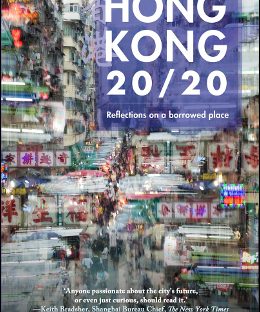
Michael Tsang reviews PEN Hong Kong's anthology Hong Kong 20/20

That Hong Kong finally has its own centre of PEN International—the writer’s organisation devoted to promoting human rights and freedom of expression—is a promising reflection of the ever-maturing literary scene in the city. And that PEN Hong Kong has managed to put together this star-studded debut anthology, with contributions from a large number of the big names from Hong Kong’s literati, is a testimony to the collective power of the pen. Titled Hong Kong 20/20, this collection of essays, poetry, fiction and even cartoons aims to provide a magnified picture of post-Umbrella Movement Hong Kong, and it does not disappoint.

Reviews

In the Gutter, Looking at the Stars

Harvey Thomlinson reviews Happy Dreams by Jia Pingwa

Among the middle-class denizens of the literary city, outsiders like Jia Pingwa often feel a responsibility to inscribe their own people within its walls. Some such sense seems to have informed Happy Dreams, which follows poor laborer Happy Liu from Freshwind – a Shaanxi village like the one where Jia grew up – to the provincial capital of Xi’an, where Jia now lives as a successful author, his international reputation currently cresting.

The novel persuasively sketches the continuities that bind city and countryside in modern China as Happy and his friend Wufu are received by their mercurial fellow villager Gem Han, who has made it big as one of Xi’an’s four kings of trash. They are assigned a patch of Prosper Street to pick trash, and lodgings at Leftover House, in a muddy urban village where migrants survive amid squalor. Jia Pingwa’s perceptiveness shines through in startling details about the bare boards the poor sleep on, the stale food they eat, the hurtful contempt they suffer. The descriptions of maggoty toilets will stick in some readers’ throats like the moldy bread that Happy and Wufu subsist on.

Reviews

Seeking Identity in China’s Shadow

Jason Y. Ng reviews Generation HK by Ben Bland

Unpacking the young generation in Hong Kong is a tall order, not least because a singular, archetypical “Hong Kong youth” does not exist. The cohort is as diverse and divergent as it comes, from socioeconomic background and upbringing to education and exposure to the wider world, to values, ideals and aspirations. It defies stereotypes and generalisations.

Ben Bland, a British correspondent for The Financial Times, is in a unique position to take on that ambitious project. Whereas Bland’s extensive experience reporting in Asia—including stints in Singapore, Indonesia, Vietnam and Myanmar—has given him a broad field of view, his relatively short tenure in Hong Kong—just over two years—allows him to look at its people through a long-range lens.

It is that unadulterated objectivity and his unquenched curiosity that make Generation HK: Seeking Identity in China’s Shadow a discerning and refreshing read.

Reviews

Wrestling with the Text

Eleanor Goodman reviews The Reciprocal Translation Project

One hardly knows where to begin with this tangle. Here we have poets who have “translated” each other’s work, despite largely not knowing each other’s languages. This is done grâce à people mysteriously labeled “bilingual specialists,” who put together something called “literal translations, including several options for words that have multiple meanings.” That is to say: they translate the poems. So why are these “bilingual specialists” not the “translators”? The point, as I take it, is to save that particular appellation for “the poets” involved in the project, an issue which I will return to below.

Translation is a notoriously tricky business, and no one really agrees on what it is and what it is not.