Essays

The PRC Just Reached the Average Age of China’s Past Dynasties

History lessons for Xi Jinping – Alec Ash

The People’s Republic of China just turned seventy years old. The fatherland is now the same age as Samuel L. Jackon, Ozzy Osborne and Prince Charles; the Chinese Communist Party is already older than Marx was when he died (64); and the government in Beijing has exceeded the life expectancy in Bhutan. Perhaps most tellingly, China’s latest political incarnation has also reached the average age that its previous forty-nine dynasties lasted.

In an excerpted piece the China Channel ran a year and a half ago, Harvard scholar Yuhua Wang studied lessons from China’s dynastial history, coming up with that seventy-year mean average, albeit accounting for “a wide-ranging variation from the Heng Chu dynasty (403–404), which lasted for less than a year, to the Tang (618–907), which ruled China for 289 years.” (It’s worth noting also that although there have been 49 Chinese dynasties or kingdoms in total, many overlapped with rival territories; there are roughly 16 periods of Chinese history, and half as many dynasties which ruled the entirety of what is now claimed as “China.”)
General

Two Years of the China Channel

We’re delighted to have reached two years since we launched the China Channel on September 25th – Lu Xun’s birthday, in celebration of his iconoclastic spirit – in 2017. Since then, we’ve published 435 stories, bringing you essays, translations, photography and fiction on Chinese society, culture, history, politics and more. To celebrate that and look forward to the future, we’ve collected a dozen of our best or most read posts from last year, listed below.

We’re still working on securing funding for the next calendar year, and give thanks to everyone who is supporting our translations on Patreon. (And if there are any generous souls who want to support at a higher level, do feel free to reach out directly). In the meantime, we’re committed to bringing you two to three quality posts each week, filling in the white spaces of China coverage. Do follow us on email or social media to keep up to date. Thanks for reading. – The Editors

Excerpts

Murder in Peking

Graeme Sheppard reopens an old investigation

EXCERPTED FROM A DEATH IN PEKING BY GRAEME SHEPPARD

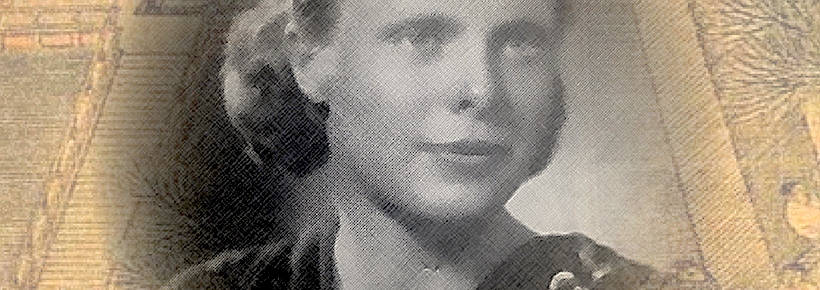
The Times of London published this short but sensational news item on Saturday, January 9, 1937, under the title ‘British girl’s death in Peking; Murder Suspected’:

“The British authorities and the Chinese police are investigating the mysterious death last night of Pamela Werner, a 17-year-old British girl, the daughter of Mr. Chalmers Werner, the author and former British Consul at Foochow. She disappeared yesterday evening after skating at the French club rink. The body was found this morning inside the city wall and 250 yards from the girl’s home, at one of the loneliest spots in the city. It had been so badly mauled by stray dogs as to be unrecognisable and to make it difficult, except after a careful medical examination, to hazard a guess how she met her death, but in view of the lack of evidence that an accident had happened murder must be suspected.”

The Times was impressively quick off the mark with its report from its own correspondent in Peking, but the article contained two errors. Pamela Werner was nearly twenty, not seventeen, and her father’s name was Edward Theodore Chalmers Werner. 

Essays

The Father of Modern China Was Inspired by Lincoln, Not Marx

How Sun Yatsen’s early ideology traces back to the American President – Matthew Ehret

China today is a paradox: on the one side, it is a nation based upon centralized government, yet it also has a vast private sector, entrepreneurial culture and market economy. Its leaders call this “socialism with Chinese characteristics,” but there is a larger history at play, going back to the founder of the nation, Sun Yatsen. As a statesman with connections to America – in the autumn of 1911 he was on a tour of the US to speak and raise funds when the news of the Wuchang uprising that eventually brought down the Qing dynasty broke – Sun’s own political philosophy was heavily influenced by America’s early principles of governance.

Dr Sun Yatsen was not a follower of Karl Marx – whose theories of government have shaped China’s modern state – but neither was he a proponent of the liberal theories of Adam Smith or John Stuart Mill. Rather than pick an extreme on the political left or right, Sun Yatsen instead found himself firmly grounded in the moral philosophy of both Confucius and an American inspiration: Abraham Lincoln.

Essays

Illiberal China

Josh Freedman reviews two new studies of Chinese political models

The past forty years of economic reform have vaulted China into the upper echelons of global wealth and power, but it has come at a high social cost. China is wealthier than ever, but inequality is rampant, individuals feel unmoored, and there is no sense of public trust.

Where can China go from here? In 2012, the prominent Chinese sociologist and public intellectual Sun Liping summarized the state of China’s intellectual discourse by outlining (in Chinese) four possible directions for China’s future. China’s leaders could return to the recent past, reviving the egalitarian populism of Maoist socialism. On the other extreme, the country could double down on privatizing the economy, “deepening reforms” along the lines preferred by the business class. Alternatively, given the entrenched barriers to any major transition, the Party-state could simply try to preserve the status quo. Or, finally, it could opt for a more comprehensive reassessment of the basic premises of reform, and forge a new path based on some combination of institutions that combine constitutional politics and economic fairness.