
Essays

Homeland Calling

China’s ethno-nationalist policies towards the Chinese diaspora – Kenddrick Chan

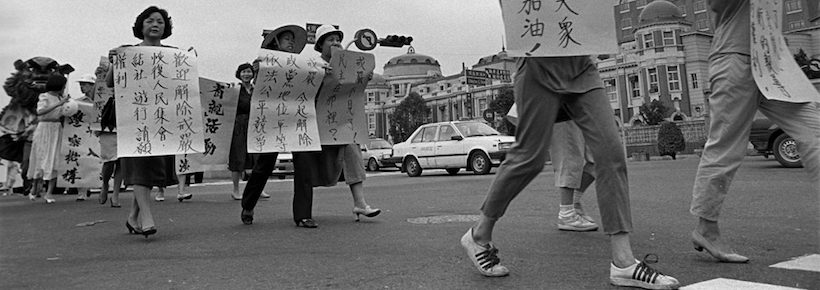
Recent years have seen a global resurgence of ethnic nationalism. Yet some scholars have pointed out that political identities based on value systems revolving around ethnicity are nothing new, claiming that they are often instigators of history – with disastrous consequences. Ethno-nationalist desires reshaped Europe’s borders in the 1910s and threatened to do so again two decades after. Despite more than seven decades of relative peace, largely kept in place by the multilateral organizations and deepening global integration, nationalism appears to be returning to the forefront of politics once more.
Translation

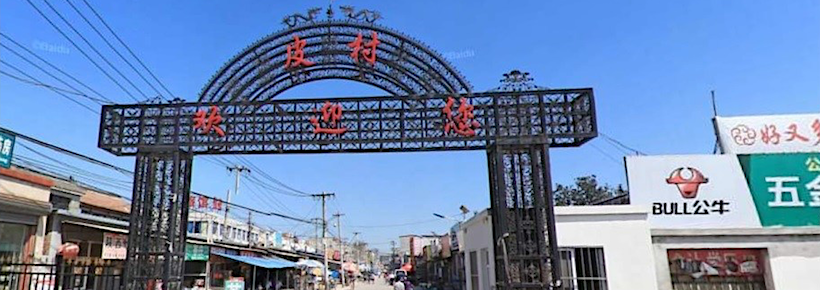
The Picun Writer’s Group: Part One

True stories from a migrant workers’ village collective – translated by Jeremy Tiang

From the editor of One-Way Street: A few years ago, the Picun Writers Group caught the attention of Chinese society and the wider world of letters. This was not just because of their social status – they are not writers in the traditional sense – but because of their output itself, which comes closer to capturing realities than the work of many professional writers. Their words cut straight to the heart of our times, and roused the sympathy of readers. They clearly and comprehensively related the life changes of ordinary Chinese, which these days is more important than any literature technique, school or style.

The Picun Writers Group first started its community writing classes on September 21, 2014. Every week, volunteer teachers and fellow workers would discuss how to use writing to record and reflect on their lives. The workers gradually started to write and let their voices be heard. Nowadays their works have been successively published in a variety of nonfiction venues, and rising numbers of readers are paying attention to them and the communities they represent. This post is the first of two (the second will follow next Friday) that will bring some of their writings into English for the first time. – Wu Qi

Essays

Could Taiwan Today Be Mainland China Tomorrow?

The shifting river of Chinese politics – Scott Savitt

There is a Chinese proverb: “The Yellow River shifts course every 30 years – three decades east, three decades west – and with it the fortunes of those who live alongside it” (Sanshi nian he dong, sanshi nian he xi 三十年河東, 三十年河西). People say this to comfort each other in times of trouble, the equivalent of “this too shall pass.”

Thirty years ago I was a Beijing-based correspondent in my early twenties, covering the student-led democracy protests in Tiananmen Square and subsequent military crackdown. Those seven weeks of peaceful, celebratory protests were the most hopeful experience of my life, and the slaughter I then witnessed on the Avenue of Eternal Peace the most traumatic. I watched as the army fired machine guns and plowed tanks into crowds to carry out their order to clear Tiananmen square before dawn.

Oolong Podcast

Studying Chinese Lawyers

Legal scholar Benjamin Van Rooij on China’s rule breakers

The fourth episode of Oolong Podcast, law is on the bench. It’s not easy to study lawyers in China, says Benjamin Van Rooij, Director of the Netherlands China Law Centre and Professor of Chinese Law and Regulation at the Faculty of Law at the University of Amsterdam. Benjamin tells Lev Nachmann about his years of research in China and offers tips for conducting fieldwork, to professionals and academics alike:

Reviews

The Place Where We Buried Our Youth

Weijian Shan’s memoir spans his sent-down youth and immense success – Kyle Hutzler

Weijian Shan is one of China’s most accomplished financiers. But like many of his generation who have lead China’s renaissance of the past 40 years, his path was far from assured. His formal education was halted after elementary school, when Shan became one of the millions of young people exiled to the countryside as part of the Cultural Revolution. In his remarkable new memoir, Shan relives those years of constant hunger and crushing labor, and the historic twists that would transform his life while China reformed.