Essays

Reformist Propaganda

Yifu Dong visits Beijing’s new exhibit celebrating economic reform

Forty years ago, China’s leadership decided that the Chinese people deserved better than having to suffer from mass hunger, abject poverty and periodical chaos. It rolled out a program called Reform and Opening, setting China on a path of capitalist normalcy, or as most pundits put it, “an economic miracle.”

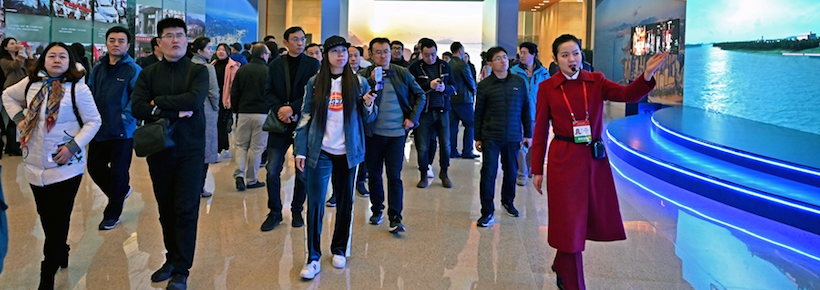
This past November, the National Museum of China, a sullen monolith hunching over the east side of Tiananmen Square, put on a grand exhibit called ‘The Great Transformation,’ which celebrates China’s progress in the past four decades. Before it opened on November 13, when President Xi Jinping visited, the National Museum closed for 50 days in preparation. Seeking earth-shattering revelations about Chinese politics from such a well-orchestrated propaganda exhibit is the same as digging for gold in a coal mine, but the basics of China’s new narrative about Reform and Opening are worthy of a recap.

Excerpts

Reform and Opening: China’s Turning Point

Crossing the river by feeling for the stones – Klaus Mühlhahn

On December 13, 1978, at the end of a month-long preparatory conference for the historic Third Plenum of the Eleventh Central Committee, to be held in Beijing from December 18 to December 22, Deng Xiaoping delivered a carefully thought-out, well-calculated speech, which not only dared a risky break with the Maoist past, but ushered in a new era of reform and opening. It is time, Deng stated, that the members of the Chinese Communist Party "emancipate their minds, use their heads, seek the truth in the facts, and look to the future together." He criticized that many Party members clung to "book knowledge" and were accustomed to "hang their flag in the wind." But conservatism and the worship of theories must be overcome in order to make China a "modern and powerful socialist state." Deng also made it clear that pragmatism should never call into question the political leadership of the Chinese Communist Party.

Hidden History

How Coca-Cola Came to China, 40 Years Ago

The sugar trap of market normalization – Ramsey Fahs

On December 13, 1978, two days before the announcement of Sino-American normalization, Coca-Cola became the first foreign corporation allowed back in to the People’s Republic of China. Representatives of President Jimmy Carter, another of Georgia’s more famous exports, had to politely request that Coke delay announcing the deal to avoid the embarrassment of the US being beaten to the diplomatic punch by a purveyor of carbonated sugar-water.

Coca-Cola was an unlikely candidate for this particular milestone. In the decades prior to the agreement, the company had eagerly tied its business practices to the American government’s aim of defeating global communism and promoting democracy. In China, meanwhile, anti-American propaganda smeared Coca-Cola as one of the worst incarnations of American imperialism. Yet the little-known story of how Coke, which celebrated its 40th anniversary of normalized relations with China in December, went from imperialist shill to the first foreign brand welcomed back to the PRC illustrates forces that still define the economic relationship between China and American business.

Chinese Corner

Happy New Year to Zhu

Pig out on these Lunar New Year puns – Anne Henochowicz

Lunar New Year, a.k.a. Spring Festival, a.k.a. Chinese New Year, begins today. This is an auspicious time of year for punsters – if, for instance, someone wishes you “year upon year of fish” (niánnián yǒu yú 年年有餘), that’s because “fish” ( 魚) sounds just like “abundance” (餘). Mandarin has very few phonemes (the sounds that make up words), so opportunities for punning abound. (I speak here for Mandarin only, but other varieties of Chinese have their own new year puns, and some of the Mandarin ones work in other varieties, too.)

As this year is the Year of the Pig, I’ve been signing off my emails with “I pig you a happy new year” (zhū nǐ xīnnián kuàilè 猪你新年快樂), as “pig” (zhū 猪) and the verb “to wish” (zhù 祝) are near-homophones, separated only by a tone.

Reviews

After the Umbrella Era, Turning Inward

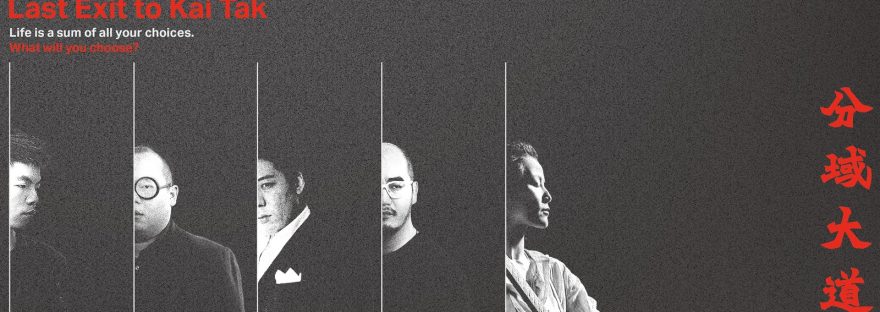
Yvonne Yevan Yu watches Last Exit to Kai Tak

Edward Lau Wai-tak runs up the back stairway of a government building, followed by a team of supporters. He tries one locked door, then another. As a district council candidate, he's there to demand a meeting with officials, whom he says are evading their appointment. He curses at them, puts his weight on a door handle, and it opens. “Go through here,” he says urgently.

With elections only a few months away, Lau and his team are protesting the cutting down of four century-old banyan trees on Bonham Road in Sai Wan district, Ed Lau's would-be constituency. Growing out of stone walls, anchored by sprawling roots, the trees are a local marvel. But when earlier we see Lau, a businessman-turned-politician, standing in front of the stumps with a megaphone and a rallying cry, one can't help but feel an incongruity with his platform, that he is campaigning on an outsized sense of proportion. But it’s not just about the trees.