Essays

Literary Heartthrobs

A centuries-old tradition of writers as sex symbols in China – Pamela Hunt

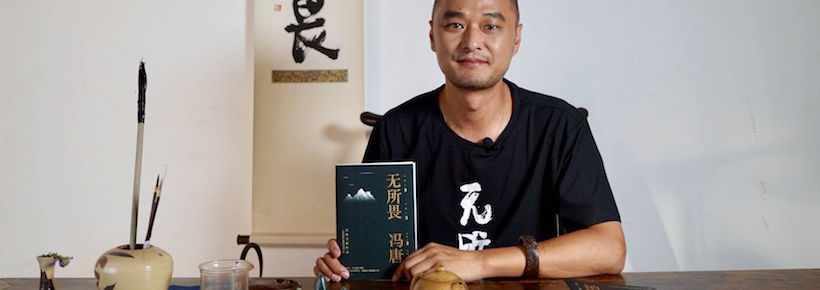
If you were so inclined to follow the Weibo account of Feng Tang, a Beijing-based writer, you might notice a reccuring meme. A fan – almost always a young, attractive female – will post a picture of herself holding a copy of one or more of Feng Tang's works. She will strike an appealing pose, maybe add a few hearts or kissing emojis, or even wish the author a happy Valentine's Day and refer to him as a “dream boy.” Feng then reposts the message on his own Weibo page, with a suggestive phrase such as “we are really enjoying ourselves tonight.”

There is something intriguing about this trend, not least because it is centered around an author and businessman in his late forties whose image does not quite match those of the singers, film stars or models who we might more readily expect to attract this kind of adulation.


Hidden History

China’s Most Played Piece of Music

A funeral dirge with a red history – Kevin McGeary

Music that wears its politics on its sleeve is destined to swing violently in and out of fashion. The fado, Portugal’s most famous musical form, is now tainted by its association with fascism. Richard Wagner – who in his lifetime was given his own opera house – has long suffered the stigma of his association with the Nazi Party, which was founded 37 years after his death. China’s “red songs,” works that show support for the Chinese Communist Party and its causes, appeared to be making a comeback in 2011 due to a campaign by charismatic Chongqing official Bo Xilai. A few years earlier, an American going by the stage name of Hong Laowai became a much-loved online celebrity in the People’s Republic for his renditions of patriotic Mao-era songs. In neither case was a movement sparked.

Though writing music is often an attempt at achieving immortality, even the most popular music can die with the beliefs that inspired it. Songs that were staples in the 1960s, such as ‘The East is Red,’ are now seldom heard outside period dramas due to their toxic associations. But one such song that has endured in China is the funeral dirge (āiyuè 哀乐), composed in 1945 by then-25-year-old Luo Lang.

China Conversations

Delving into Shanghai’s Demimonde

Paul French talks nonfiction noir with  Jonathan Chatwin

Where did the research for City of Devils start?

My first port of call is newspapers, specifically the old China coast newspapers, which are mainly – though not exclusively – in English: the North China Daily News; the China Press; the Shanghai Mercury; the Peking Gazette. Some of it is online, but not much has been scanned, so you have to go to the British Library newspaper archive, Hong Kong University library or the Zikawei library in the Xujiahui district of Shanghai, and use originals or microfilms. In going through those, you find stories which give you threads to pull at. And the stories are important in context of the Sinology. City of Devils, for instance, takes its lead from Frederic Wakeman’s Sinological work. He wrote two books, on policing Shanghai in the 1930s and on Shanghai’s Badlands. But both are focused on the Chinese experience, whereas I write about the foreigners.

Reviews

“You Can’t Arrest Us All!”

China’s Feminists Are Betraying Big BrotherEmily Walz

Rewind to early 2015, Beijing. Groping on the crowded subway system has the city government considering women-only cars in an effort to prevent sexual harassment (a marginal improvement over its 2013 plan to fix the problem by telling women to cover up). A month and a half later, five young feminists are planning to distribute anti-sexual harassment stickers on public transit for International Women’s Day. They never get the chance. Instead, they are swept up and brought to a detention center in Beijing. The women’s names are Li Maizi, Zheng Churan, Wu Rongrong, Wei Tingting, and Wang Man, but when the state locks them up, they are reborn as the Feminist Five. The sudden crackdown marks a political tipping point: feminist activism in China has now crossed from the realm of the officially tolerated to the politically dangerous.

Translation

The Besieged Rainbow

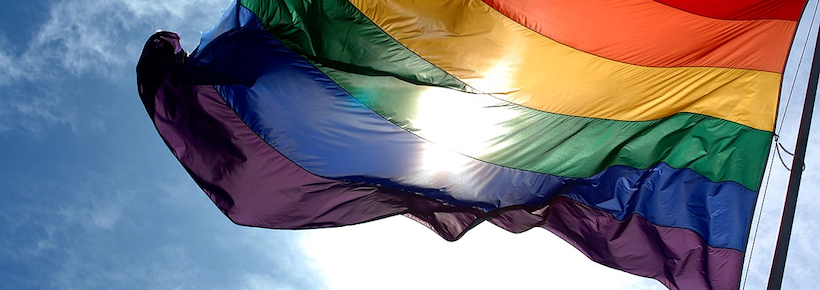
Dispatches from an ally of China’s LGBT movement – Xiaoyu Lu

The phone call came in at seven or eight in the night. After saying hello, the voice paused. As I was about to hang up,  the voice asked whether I worked for the UN. Yes, I answered. He explained that he was calling from the hotel which we booked for the conference participants. He hesitated again. Is there anything wrong? I asked.

There had been a group of strangely dressed people at the reception, he said, and the hotel would like to confirm whether I had really invited them. I could have started a lengthy lecture about the term “strangely dressed people,” but I did not. Yes, we invited them, I confirmed. I detected a tone of embarrassment in his next question. He asked what kind of conference we were holding, and whether it had been registered with the Public Security Bureau. I raised my voice, and in a solemn manner said it was a UN conference on public health, and there was neither need nor obligation to register. He couldn’t come up with a reply, and hung up.