Dispatches

Slow Burn

The rise of Chinese-American rapper Bohan Phoenix – Yi-Ling Liu

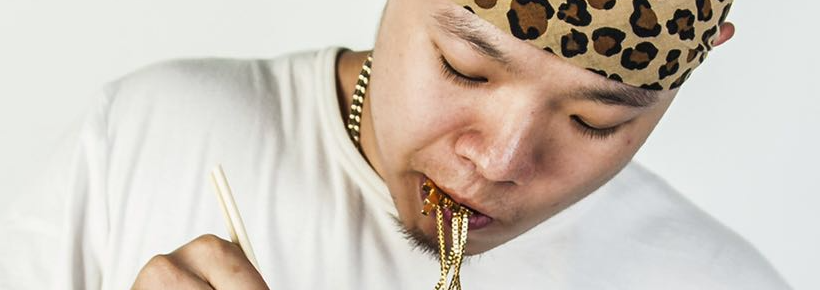
On a chilly spring day in a quiet neighborhood of East Beijing, Bohan Phoenix lounges on the divan of his hotel room. The twenty-five-year-old rapper flew in from Shanghai the night before, and is enjoying a pause after several whirlwind weeks promoting the launch of his new album Overseas. For a brief moment, dressed in a white long-sleeved shirt, black joggers, and a gold hoop on his left ear that once belonged to his grandmother, Bohan lies still, a Portrait of a Reclining Rapper in Repose.
Dispatches

Who by Fire

Erica X Eisen visits China’s Western edge

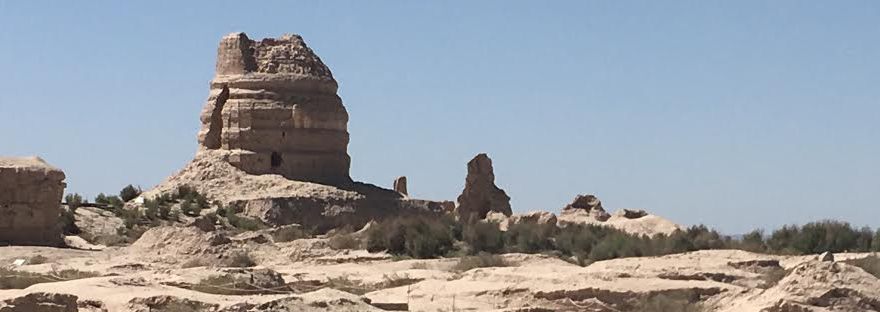
Of Suoyang City only ruins remain: the scattered remnants of an imperial garrison town in the Gobi Desert that once fended off the advancing armies of Genghis Khan. Early in its history, the westering forces of Xue Rengui were besieged there; the general’s soldiers, depleted and half-starved, kept themselves alive by rooting in the sand for a parasitic purple-brown fungi that thrives in the arid region. When the siege was lifted, the men renamed the city after the only thing that had sustained them.

Dispatches

Gay in Beijing

Notes from the Rainbow Underground – Julien

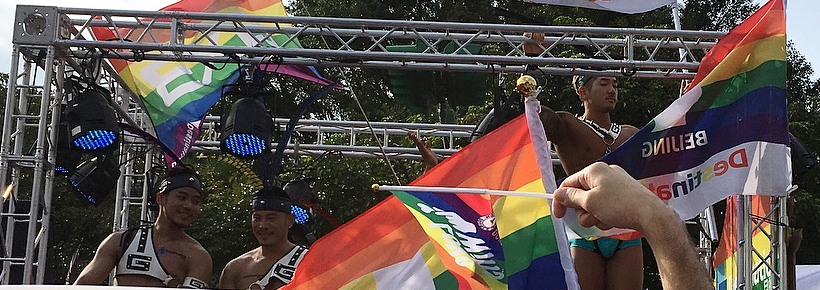
Somehow, someway, I became the only foreigner to join Purple, the officially “unofficial” LGBTQ organization of Tsinghua University and the greater Wudaokou area. To commemorate the International Day Against Homophobia (IDAHO) on May 17, Purple planned to hand out rainbow flags in front of the main cafeteria on campus. When IDAHO came, the event lasted less than five minutes before students were escorted away by campus security. I watched the flood of messages in our WeChat group as people scurried to come up with a Plan B. Yet no one felt the shut-down of Plan A was out of the ordinary. In fact, it was expected.

Dispatches

A Mind Map of Beijing

A junkyard jaunt through an artist’s psychogeography – Robert Foyle Hunwick

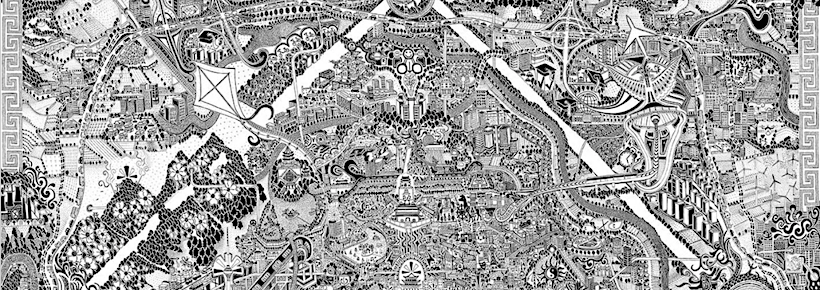
UK artist Gareth Fuller calls his door-sized monochrome artwork, Beijing, unveiled at the Art Beijing fair, earlier this month, a “mind map.” Like his previous works, these psychic illustrations of physical spaces are drawn with whimsical detail, literary reference, and topographical disregard. Fuller’s version of the Forbidden City, for example, weaves in a reference to China’s Belt and Road initiative and its high-speed rail network.

Fuller’s reimagination of China’s capital speaks to its fraught history of hegemonic expansionism, cultural appropriation, ethnic strife and political correctness (at least no one calls it Peking any more), as well as good old-fashioned blood feuds, border tensions, and foreign and domestic plunder. A palimpsest of detail, Beijing reveals more with each viewing, from cultural allusions and jokes to an accident involving a seven-foot ditch, commemorated by an ankle with a question mark.

Dispatches

A Dream of Grey Mansions

Back to the land – Nick Holdstock

In 1979, 80 per cent of China’s population lived in the countryside; by 2010 this proportion had almost halved. Of all the convulsions that have shaken Chinese society in the last hundred years, the shift towards becoming a primarily urban society has arguably been the most revolutionary. Though the countryside witnessed huge upheavals during the Maoist era, first with collectivisation, then with the terrible famine that followed, neither of these led to the removal of almost an entire generation from rural communities. But the great rush towards the factory towns in south China has removed the majority of people of working age from the countryside. In many villages, the only people left are grandparents and their grandchildren.

I wanted to see how the continuing exodus to the cities had affected rural life in Hunan, so in 2014 I accompanied a friend of mine on a trip to his village.