Reviews

The People’s War

John B. Thompson reviews China at War by Hans van de Ven

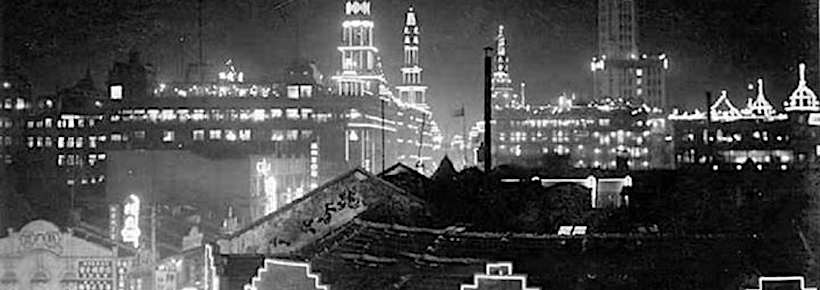
Novelist Lao She watched Chongqing, China’s provisional capital during World War II, burn after a Japanese firebombing on May 4, 1939. “This is ‘May Fourth’!” he wrote, recalling the political and cultural movement to revive Chinese nationalism which started on that same date in 1919. “We will not accept this menace, this fire and blood! We will spill our hearts to struggle for and win rebirth for all of China!”

At the time, many Chinese argued that the War of Resistance Against Japan would win a new life for China, fractured by civil war and colonialism since the collapse of the Qing dynasty in 1911. What kind of nation was to be reborn was not clear. As Hans van de Ven emphasizes in China at War: Triumph and Tragedy in the Emergence of the New China, “China was at war not just with Japan but also with itself” in a protracted struggle for China’s future between the sovereign Nationalist Party and their Communist rivals.

Reviews

The ABC of Chinese Poetry

Yunte Huang reviews the latest in the How to Read Chinese Literature series

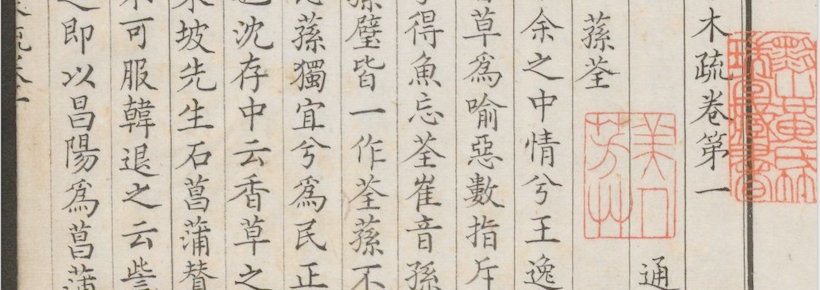
It was scandalous when T. S. Eliot, circa 1928, called Ezra Pound “the inventor of Chinese poetry.” To be fair, what Eliot meant was that the man he had earlier extolled as “il miglior fabbro” (the better maker) in The Wasteland, had fashioned a version of Chinese poetry for their generation. As Eliot quickly added, “Each generation must translate for itself.”

This is not the place to quibble over Pound’s Chinese invention, a topic that has already generated enough articles, dissertations and monographs to fill a sizable library. Yet the notion that a nation’s poetry can be made elsewhere, virtually reborn in a foreign land and language, is intriguing. A quick glance at the periodic reincarnations of Chinese poetry in English, from James Legge’s Confucian Odes, to Pound’s Cathay, to Gary Snyder’s Cold Mountain, would lend a kernel of truth to Eliot’s otherwise curious claim. As Walter Benjamin famously put it, translation gives literature a new life, an afterlife. And the vital importance of Chinese poetry’s afterlife to Anglo-American literature may be encapsulated in Pound’s proclamation, “A great age of literature is perhaps always a great age of translations; or follows it.”

Reviews

Left in the Wake of a Mother’s Deportation

Rui Zhong reviews The Leavers by Lisa Ko

There are two types of ethnic Chinese in America: those who do not have to worry about deportation, and those whose lives can be upended by it.

These two groups often pass by each other without realizing their differences. They may find themselves standing across from one another at the checkout line. A scientist born in the United States might share notes with a lab-mate overstaying his student visa. A woman comfortably vacationing with her visa-stamped passport can speak Mandarin with a manicurist who is one annoyed colleague’s phone call away from ICE custody. Every deportation leaves behind friends, colleagues and lovers irreversibly damaged by the removal.

Reviews

The Devil’s In the Details

Lisa Brackmann reviews City of Devils by Paul French

For the first third of Paul French’s latest nonfiction book set in historical China, I felt guilty for enjoying it as much as I did. There are few places more romanticized in the Western imagination than pre-WWII Shanghai, and City Of Devils plays into those tropes: exotic, corrupt Shanghai, “home to hopeful souls from several dozen nations joined together by one simple guiding ethos: money and the getting of it.” It is a portrait of a city filled with gamblers, soldiers-of-fortune and opium dens. Its occupants include “White Russian women of dubious occupation,” “dead-eyed Eurasian Macanese” and “hard-working Filipinas and Formosans” plying their trade in the flops and whorehouses of Blood Alley.

City Of Devils focuses on two Westerners who have come to Shanghai to prosper and to escape: dapper Joe Farren, a Jewish refugee from Hitler’s Europe whose nightclubs and performing troupes earned him the nickname “the Ziegfeld of Shanghai” (after the Broadway impresario Florenz Ziegfeld), and American fugitive Jack Riley, the “Slots King” making his fortune with his fists, his smarts, and a pair of loaded dice.

Reviews

China Memoirs Get Personal

Susan Blumberg-Kason reviews The Road to Sleeping Dragon

A decade ago, China memoirs hit the publishing world in the US with a force that hasn’t let up. The storm is powered in part by Peace Corps alumni: Mike Levy (Kosher Chinese); four-time China memoirist and New Yorker writer Peter Hessler; and Michael Meyer, whose third China memoir, The Road to Sleeping Dragon: Learning China from the Ground Up, was released late last year. I enjoyed Meyer’s The Last Days of Old Beijing when it came out in 2010. And I poured through In Manchuria in a couple of sittings a few years ago. They all took a serious tone and seemed determined to inform a reader who hadn’t ventured to China.

Apart from John Pomfret in his memoir, Chinese Lessons, about a time just after the US and China normalized relations, most American men-in-China memoirists haven’t delved much into their personal lives. And most have been single when they arrived in China. Women memoirists have been more open with their personal stories, like Rachel DeWoskin in Foreign Babes in Beijing and Susan Conley in The Foremost Good Fortune. Fuchsia Dunlop’s Shark’s Fin and Sichuan Pepper is a food memoir, but she goes into detail about feeling lonely and isolated at her school.