Reviews

Writing Across the Pacific

Michael Gibbs Hill reviews Transpacific Community by Richard Jean So

My collection of Chinese writer and linguist Lin Yutang’s books in English was acquired for $1.50 in total. My Country and My People and With Love and Irony came out of a box marked “FREE PLEASE TAKE” in the lobby of the apartment building where I used to live in Washington Heights, New York. For two whole quarters I got The Importance of Living and The Wisdom of Confucius at a yard sale in Seattle, and my biggest purchase, a second edition of Moment in Peking, cost a buck at His House, a Christian resale shop on the outskirts of Columbia, South Carolina.

I might not have paid much, but in Lin Yutang’s case, price is no reflection of quality. Mostly forgotten today, his books lurk in church basements and on grandparents’ bookshelves across North America. The same goes for Lin’s contemporary, Pearl Buck. When I lived in Taipei in the late 90s, the used bookstore in my neighborhood had a pile of four or five copies of The Good Earth in Chinese. The only copy without mildew went for the price of a sugary milk tea sold from a street-side stall.
Reviews

Money Speaks

Mike Cormack reviews The War For China’s Wallet by Shaun Rein

Written by a businessman rather than an academic or economist, The War For China’s Wallet looks at China’s use of its economic power and huge consumer market for political and strategic goals. The author, Shaun Rein, is the founder and managing director of China Market Research Group, and the author of The End of Cheap China and The End of Copycat China. His previous books have proved highly prescient, outlining incipient economic trends and their consequences at a time when proclaiming them seemed bold, if not foolhardy. The War For China’s Wallet takes a broader perspective, delineating China’s efforts to use its power over consumer spending for its own purposes.

Reviews

Sci-Fi for the World

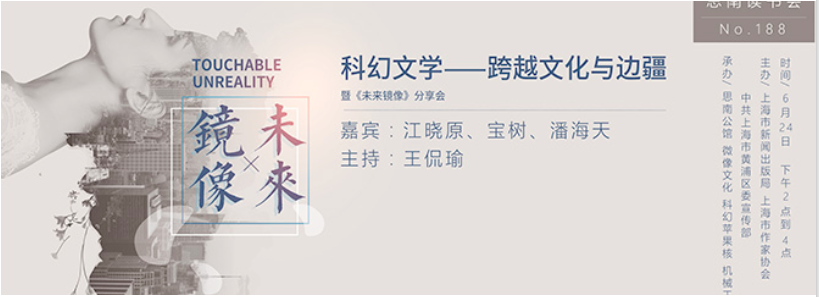
Anjie Zheng reviews Touchable Unreality

Lu Xun, the father of modern Chinese literature, predicted in 1903 that science fiction would play a major role in the advancement of China. It took a century, but that moment has arrived. While science fiction in China was restricted mainly to political purposes after 1949, it has achieved a literary life of its own in recent years.

A new bilingual anthology makes this genre even more available to global readers, thanks to the sparse, expressive translations of Ken Liu, Carmen Yiling Yan, Nick Stember, and John Chu. Touchable Unreality features some of China’s most beloved contemporary science fiction authors, including Liu Cixin and Hao Jingfang, the only Chinese authors to have won the Hugo Award, the highest honor in science fiction and fantasy writing.

Reviews

Imperial Stars

Jonathan Chatwin reviews Heavenly Numbers by Christopher Cullen

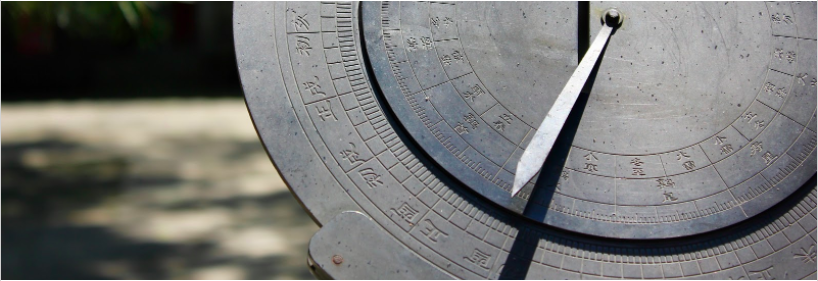
High on a solitary outcrop of crenellated city wall in Beijing – an anomaly among the towering glass and concrete – sits China’s Imperial Observatory: a collection of the astronomical instruments with which the officials of the Qing dynasty tracked the movement of the heavenly bodies.

It is a relic of an age that can often seem confoundingly distant in modern China. The small stretch of city wall is one of the only sections of that fortification remaining, the rest having been demolished in the two decades after the Communist Party came to power in 1949. That absence finds an ironic echo in the name of the adjacent subway stop and traffic intersection: Jianguomen, the “Gate of National Construction.” This was one of the gates punched through the old city wall by the Japanese, during their occupation of the city in the late 1930s. It met its end, along with much along this axis of the city, in the 1960s as the government began constructing a subway system.

Reviews

Essence and Form

Chinese architecture struggles to find its identity – Matt Turner

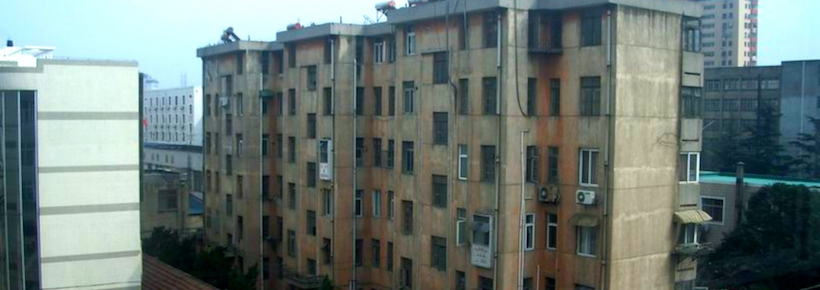
When Xi Jinping called for an end to “weird buildings” in a 2014 speech, journalists raced to point out their favorite offenders, from showpieces of contemporary architecture like Beijing’s massive CCTV tower or the Olympic “Bird’s Nest” Stadium, to less known (but no less striking) examples: buildings shaped like coins, sages, various teapots, and even the USS Enterprise. In comparison to these architectural oddities, Xi praised traditional Chinese architecture and the values it inspires (primarily loyalty to the state).

But while it’s not hard to read between the lines of his speech, it’s hard to pinpoint what exactly Xi means by traditional Chinese architecture. Most Chinese cities are hodgepodges of styles: not only the showpiece buildings and skyscrapers nestled next to old courtyard homes and lanes, but also shopping and office complexes, such as Taikoo Li Sanlitun in Beijing (site of the infamous Uniqlo sex video that surely violates traditional values), or the SOHO complex across the street from it, which looks like a set from Logan’s Run