Translated Chinese Fiction

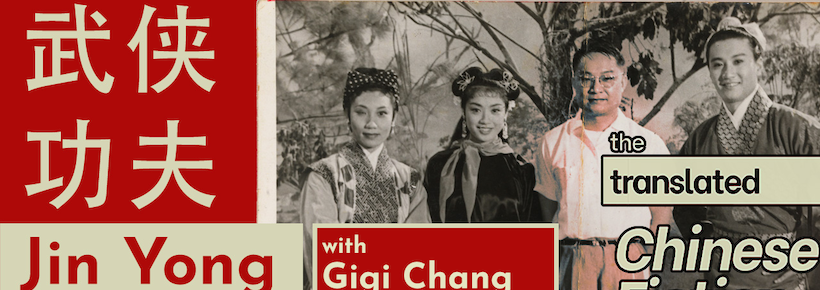
Jin Yong’s translator on martial arts novels

An episode of the Translated Chinese Fiction Podcast

“We Han Chinese outnumber the Jurchen by more than a hundred to one. If the Imperial Court decided to employ honest and loyal men, our great Empire would prevail. With one hundred of our men against one of their worthless soldiers, how could the Jin army win?”

In this syndicated episode of the Translated Chinese Fiction Podcast, host Angus Stewart and translator Gigi Chang discuss the literary merit and cultural impact of Legend of the Condor Heroes, the series of wuxia (martial arts) novels by grandmaster Jin Yong, or Louis China, who died in 2018. The Condor Heroes series is a magnum opus in Chinese literature – both highbrow and lowbrow – and pop culture in general. In this, the first episode of the podcast's wuxia season, Angus and Gigi get to grips with this behemoth of genre fiction. The first of the novels, Legend of the Condor Heroes: A Hero Born is already out in English (translated by Anna Holmwood), and at the China Channel we both reviewed and excerpted it. The second novel published in English, A Bond Undone, was translated by Gigi Chang:

 

Dispatches

Taiwanese Theatre During Coronavirus

A theatre troupe rebuilds after a fire and the pandemic – James Chater

In August last year, when Liu Ruo-yu, the artistic director of U-Theatre (優人神鼓), saw the charred remains of the group’s rehearsal space and spiritual home on Taipei’s Laoquanshan, her first thought was not to what might have been incinerated, but a question: “Heaven, what is it you want to tell me?”


The devastating fire destroyed much of the group’s compound, and with it numerous drums, props and other musical instruments essential to their performances. It was the beginning of what, on the surface, should have been the most challenging year in the group’s history; just six months after the blaze, the worsening pandemic forced Liu into canceling all of their upcoming shows.

However, even as Liu posed the question to the heavens on the day of the fire, indistinctly, she already knew the answer: “We had to stop…we had to come home.”

Barbarians at the Gate

China’s Education Ambitions (Part II)

An episode of Barbarians at the Gate

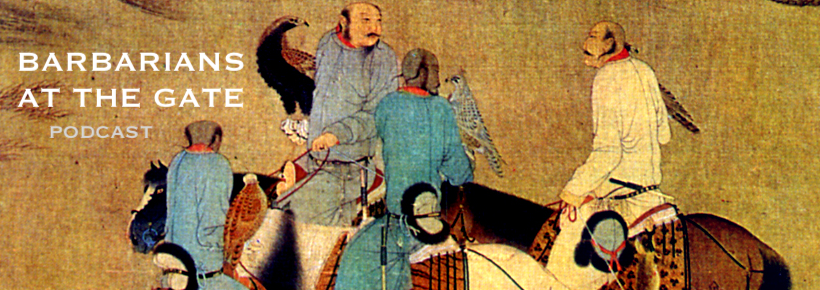
Following on the previous episode about the Chinese education system, Jeremiah and David continue the discussion with award-winning journalist and author Lenora Chu. Lenora is the author of Little Soldiers, a melding of memoir and journalism that brings to light the enormous cultural differences between the Chinese and American education systems. In recounting the adjustments of her young son to the academic environment of an elite Shanghai elementary school, Chu explores the complex web of social conditioning and parental cooperation that results in the high-achieving “little soldiers” in the Chinese system, and weighs the advantages and disadvantages of the East and West educational models. The conversation also touches on the gaokao, the controversial college entrance exam, the supposed “creativity gap” in the Chinese model, and the similarities in the phenomenon of “helicopter parents” in the two cultures:

General

Support Chinese translation

A call for Patreon donations to fund original translations from Chinese


Last week, we featured a long translation (by our own translations editor Anne Henochowicz) of scholar Tang Danhong's search for an interred Uyghur intellectual and former colleague who had since been locked up in a Xinjiang re-education camp. We believe that funding and publishing such translations is an invaluable addition to the China conversation. Hearing Chinese voices adds much-needed perspective to the issues of the day, such as Tang's outrage at what her own nation is perpetrating in its far West.

Since our launch in fall 2017, we have published scores of original translations of the best contemporary non-fiction, fiction and poetry. We have done so in partnership with Read Paper Republic, One-Way Street Magazine, and The Initium, and have also commissioned many original translations from Chinese into English. This is made possible through your support. Please consider adding your name to the list and donating on Patreon to our translations drive, from as little as $1 or $5 a month, to help us publish more content such as Tang's essay in the future.


Translation

Tarim, My Uyghur Friend

On an interned intellectual in Xinjiang, by Tang Danhong – trans. Anne Henochowicz

This essay, by Chinese-born, Israel-based author and documentary artist Tang Danhong, is a reflection on her relationship with the Uyghur scholar and poet Dr Ablet Abdurishit Berqi, called “Tarim” in the essay, whose name was later published on public lists of intellectuals interned in Xinjiang. Tang befriended Dr Berqi during his postdoctoral fellowship at Haifa University, Israel. The Uyghurs are a majority-Muslim ethnic group in China’s far northwestern province of Xinjiang and the primary target of China’s ongoing campaign of cultural genocide in the region; since 2017, China has put over a million Uyghurs and other Muslims into “re-education” camps, where their language, faith and heritage are forcibly suppressed. Tang confronts this unfolding horror as she searches for news of Dr. Berqi, a secular Muslim and political moderate who tried to work within China’s party-state system to improve the lives of his people. This is the first time the full translation is appearing in English, and the text is punctuated by excerpts of translated poetry by Dr Berqi. – Anne Henochowicz

1

I retweeted Erkin: “The president of XX University has confirmed that a research fellow in the College of Humanities, Dr. Z.B., has been arrested; his colleague, Professor G.O., a fellow in pre-modern Uyghur literature, has also been arrested, because he once attended a conference in Turkey. Their whereabouts are unknown.” The tweet included photos of the two scholars. They looked to be in their forties and both had a cultivated poise, the obvious bearing of respected intellectuals.