Essays

Taiwan Too

How the suicide of a female author sparked Taiwan’s Me Too movement – Jessie Tu 

In February 2017, indie-press Guerrilla published a novel by 26-year old Taiwanese author Lin Yi-Han, Fang Si-Chi’s First Love Paradise. The story follows a young girl who is raped by her cram school teacher over a period of five years, beginning from the time she was 13 years old. The book sold more than 200,000 copies in Taiwan, and has been translated into Korean, Japanese and Thai. Speculations arose that the novel was based on the author’s own life when, two months after publication, she died by suicide.

Despite Lin’s public denial before her death that the novel was not autobiographical, it was widely reported that she’d attempted suicide several times before her death, and that the cause of her depression was the years of abuse she suffered at the hands one male teacher. Before her death, Lin was an outspoken advocate for mental illness and had been admitted into psychiatric clinics since the age of 16. In an interview with an online critic before her death, Lin said: “I don’t want people to think of Si-Chi (the protagonist in the novel) as just another fictional character. I want people to sympathise with her.” The preface of the book reads: “The characters in this novel were adapted from real people.” 
Reviews

Perverse Pasts and Queer Futures in Taiwan

Brandon Kemp reviews the academic essay collection Perverse Taiwan

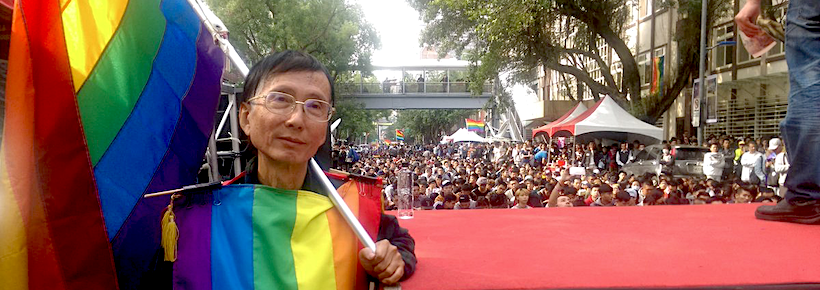
When Taiwan’s government became the first in Asia to legalize gay marriage last May, the de facto island-nation received a flurry of positive press from international media. For a brief moment, coverage of Taiwan was not dominated by its relationship with neighboring China. Yet the open question remained of what exactly it means to be Taiwanese. The island, once home to an indigenous majority, was colonized variously by the Dutch, the Japanese, and the Chinese and still calls itself the Republic of China decades after the end of the exiled Chinese Nationalists’ one-party rule. This is despite the fact that its population increasingly identifies not as Chinese but Taiwanese.

Taiwan, in short, is a queer subject. By this, I don’t mean to repeat the cliché that it’s a gay Mecca, though it’s certainly true that Taiwan boasts a rich tradition of cultural and artistic LGBT expression. Rather, I mean that Taiwan today, with its political ambiguity, cultural syncretism, and peripheral status, seems almost impossible, or impermissible. 

Essays

The Chinese Intellectual Memorialized in Oxford

Chiang Yee and England’s wartime circle of Chinese literati – Paul French

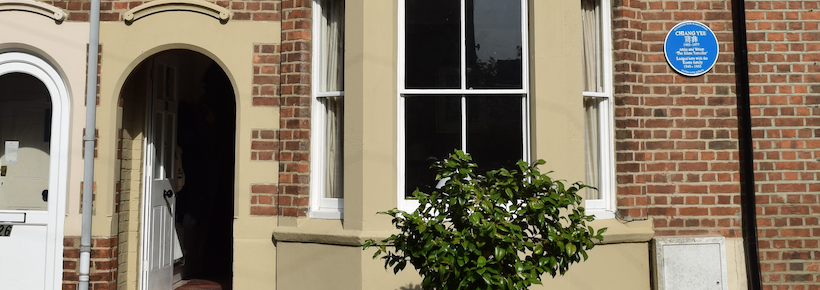
Anyone who has lived in or visited the UK will likely be familiar with the Blue Plaque scheme: permanent signs on buildings across the country, commemorating the link between that location and a culturally significant person or event. To qualify for a Blue Plaque, nominees must be regarded as eminent within their field; that is, their achievements have made an exceptional impact or deserve national recognition. Nobody is quite sure how many Blue Plaques there are – it’s rather a hotchpotch system administered locally – although London alone has about 900.

Until recently, Britain only had two Blue Plaques commemorating the lives of Chinese people: one to the writer Lao She, and another to Dr Sun Yatsen, “Father of Modern China.” 

Essays

Letters Home From Chinese Migrants

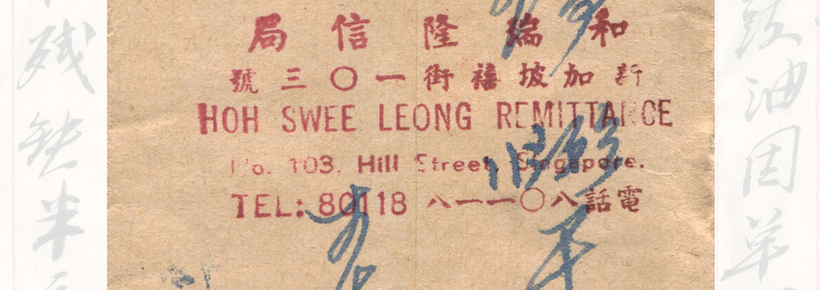
Rachel Leow reviews Dear China by Gregor Benton and Hong Liu

In the opening scene of Ang Lee’s 1994 movie Eat Drink Man Woman (飲食男女), a silent father caresses a banquet into being. Moving amidst bubbling soups, smoking oils and steaming baskets, he lavishes upon the array of dishes a tenderness he will go the whole movie without once matching in words. The diners to whom this feast is borne – his three daughters – meet it with a different quality of silence: blank looks, tinged with boredom, even exasperation. They sit to eat. Conversation stutters. Family news is stiffly exchanged: wretched, half-spoken words. Dinner is cut short by a phone call, an abrupt exit. At any rate it had been criticized – “father, the ham is over-smoked.” We learn only later of the daughters’ fears for their father’s deteriorating health, marked by his declining sense of taste – fears that ran so deep that they could hardly be spoken at all.

This scene captures an emotional core to what many would recognize instantly as Chinese family life. 

Diaspora

Too Many Homelands

To be Chinese in Vietnam, and Asian American out of Asia – Gladys Mac

One day in second grade, Mrs. L demonstrated Chinese calligraphy for my class, explaining that it’s an important part of Chinese culture. But I am Chinese too, I wondered – so how come I had no idea what she was talking about?

My family has always self-identified as Chinese, even though they lived in Vietnam for at least two to three generations. Some of my grandparents were born in Vietnam, while others migrated from Southern China. My great-grandparents had arrived in Vietnam after fleeing the Japanese occupation of China. My parents were both born in present-day Ho Chi Minh City, but they were educated in Taiwanese-founded private schools during their early school days; they did not receive a Vietnamese education until after the north and south were united. My dad’s side of the family owned a bustling Chinese restaurant; my mom’s side owned a lumber yard.