
Chinese Corner

Don’t You Call Me That

How an ancient name for China became a modern epithet – Eveline Chao

For a few years of my life, the bane of my existence was having to liaise with the government censor at the Chinese-registered, English-language business magazine I edited in Beijing. However, it must be said that, aside from the minor detail that her very existence was a primary source of all frustration in my life and a potential affront to everything I believed in, my censor was pretty chill. I was always questioning the changes she made to our work, and though she didn't have to, she went to great lengths to explain them. (Though of course, it was in her best interest to bring me round to her view on things.) And the side bonus was that through her explanations, I always learned something fascinating about China.

 

Chinese Corner

Meowing in Mandarin

Cat Memes, Cat Life – Liz Carter

It’s probably no surprise to anyone that cats meow the same in China as they do everywhere else – the onomatopoeia for their sweet siren call is miāo 喵. The word for cat practically mewls itself: it’s māo 猫, which is also a close homophone of the word for fur or hair, máo 毛, all of which is just as ubiquitous as their miāoing. In addition to meowing, cats can also cèng 蹭, which is when they headbutt/rub up against you (or a table, or a door, or anything as yet unmarked).

Chinese Corner

Sober, My Favorite Kind of Beer

Mandarin malapropisms across the Taiwan Strait – Ash Henson

Words mean what they mean. Or, do they? Say you're an American on vacation in England. You go to a restaurant and ask the nice waiter for a “napkin.” You might get a look of horror instead of a cloth or paper to dab your lips with. That’s what a napkin is in American English, but in British English, it can also mean a sanitary pad. We may both be native English speakers, but your “napkin” isn’t my “napkin.”

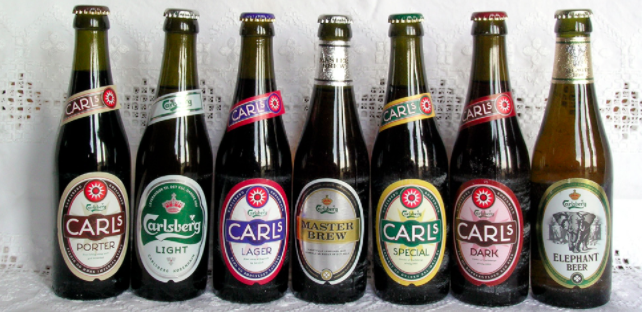
Now imagine going to a pub in Taipei with your friend. We'll call him Harvond. When the waitress asks him what he wants to drink, he says, in perfect Mandarin, “Nothing for the moment.” Thirty seconds later, she puts a bottle of Carlsberg in front of him. He and you look at each other with that, “Wait. What?!” look on your faces. Are we speaking the same language?

Chinese Corner

Nine Tones of Hell

How to be toneful in Cantonese – Rosalyn Shih

If you are intimidated by the prospect of learning Mandarin because it’s a tonal language, you might as well give up on Cantonese right now. I’ve directed my share of hope-dashing hyperbole towards Mandarin-learning friends, but perhaps the exaggeration is warranted:

“There are tones that the Cantonese use only when they argue.”

“There are some Cantonese tones that only dogs can hear.”

Chinese Corner

Of Rice Bunnies and Grass-Mud Horses

Punning the system – Anne Henochowicz

How do you say  #MeToo in Mandarin? Not how you might expect: it’s all about the rice bunny.

This cute mascot is a linguistic response to a very uncute situation. The first Mandarin variations on the #MeToo hashtag to appear at the end of 2017 include the direct translation #Wǒyěshì (#我也是#) as well as #MeTooinChina (#WǒyěshìzàiZhōngguó #我也是在中国#). Of the many women who came forward to share their stories, one drew particular attention: a graduate student whose former doctoral advisor had tried to force himself on her posted her story anonymously to the Quora-esque site Zhihu in October. In the new year, she republished her story under her real name on Weibo. Shortly after Luo Xixi’s post went viral, her advisor, Chen Xiaowu, lost his job. Women were heartened and #MeTooinChina gained momentum, speaking out about the harassment they have suffered on campus and in the workplace and circulating petitions for their universities to address the issue head-on. Unfortunately, China’s party-state apparatus pounces at any hint of a social movement. Soon women soon found their stories and petitions had been deleted, while #MeToo posts disappeared from search results.