
Chinese Corner

Smartphone Dialects

When tech meets heritage – William Sack

As a young Kentuckian, I once came home from kindergarten pronouncing my name, Will, as “Whee-y’all,” a three-syllable word – my mother was horrified. The correct pronunciation was learned before I left for school the next day. In China and the US alike, you speak your social role.

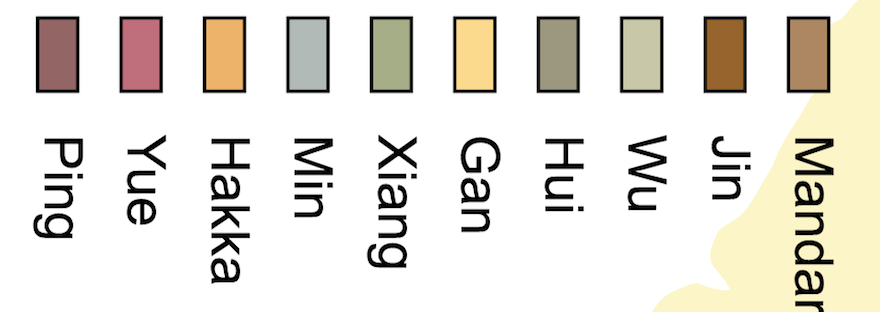
I recently went on a multi-month escapade to learn the Northeast dialect of Mandarin, also known as Dōngběihuà (东北话), literally the “speech” (huà) of the Northeast (Dōngběi). During that time I came across a surprising answer to a seemingly simple question: How are dialects passed on in China?

Chinese Corner

Love You to Death and Back

How to Romance in Mandarin – Liz Carter

Love is in the air, or at least all over social media and the candy aisles of your local convenience store. Valentine’s Day is occasion for many a confession of love or vow of faithfulness, including in most of the Mandarin-speaking world. So how do you woo in Mandarin?

The answer is, in much the same cliché way as in English. You can fall in love at first sight (yí jiàn zhōng qíng 一见钟情) or come to love someone over time (rì jǐu shēng qíng 日久生情). You can love for someone for the rest of your life (yī shēng yī shì 一生一世) or even to death and back (sǐ qù huó lái 死去活来).

Chinese Corner

Language or Dialect?

The continuum of regional Chinese speech – Kellen Parker van Dam

If internet forum discussions are any indication, there’s something of an obsession with pinning down the difference between a dialect and a language. In Chinese language circles, we’re hit with the additional complexity of the term fāngyán, translated variously as “dialect,” “variety,”  “regiolect” and “topolect.” Every new arrival to Chinese language learning wrestles with fāngyán at one point or other.

Chinese Corner

Animal Associations

An introduction to the Mandarin menagerie – Liz Carter

When you say someone’s foxy, you would expect your listener to know that you meant he or she was very good looking. But like many things, these associations don’t always translate in Mandarin, where calling a woman a total fox can get you slapped. Animal associations and metaphors, which vary from person to person and place to place, can be tricky for the language learner. To that end, here are a few fauna-related expressions to give the lay of the land in the Mandarin animal kingdom.

Chinese Corner

Name That Tune

Can learning a tonal language make you a better musician? – Eveline Chao

The part of the brain responsible for producing and understanding speech is called Broca’s area. As it happens, that area is also responsible for processing music.

There’s a lot of research suggesting that musical training also brings language-related benefits. One is that musicians learn second languages faster than non-musicians.