Chinese Corner

Let’s Go Laaaaaaaa

And learn Cantonese particles – Rosalyn Shih

“If you’re picturing someone in your head speaking Chinese and it sounds really funny,” Canadian comedian Russell Peters said, “you’re picturing Cantonese.”

Even to non-speakers like Peters, Cantonese is easily identified as the “funnier sounding language” compared to Mandarin: “It’s the more flamboyant one," he joked, "with the extended sounding words. … Sometimes they speak and it sounds like they’re falling off a cliff. Dong laaaaaaahh…”

Chinese Corner

Forget-Me-Not

Invented Chinese characters, old and new – Alec Ash

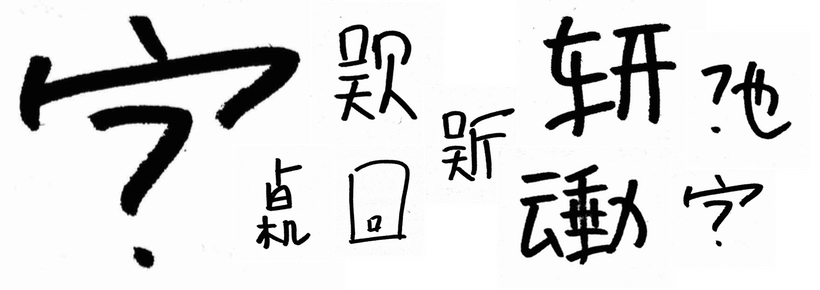
Growing up in England, one of my favorite books was The Meaning of Liff by Douglas Adams (author of The Hitchhiker’s Guide to the Galaxy) and John Lloyd (creator of the British comedy show QI). Described as a “dictionary of things that there aren't any words for yet,” Adams and Lloyd took place names – often those funny-sounding Welsh ones – and reassigned to them meanings for concepts that should have words but don’t. For example, “Ahenny: The way people stand when examining other people’s bookshelves;” “Flimby: The safe place you put something and then forget where it was;” or “Goole: The expression on the face of someone who has clearly forgotten your name.”

Chinese is like that too: full of ideas for which there should be a character, but isn’t. Only when it comes to inventing those characters, we can have even more fun with an ideographic writing system by mushing together two existing characters in novel ways.

Chinese Corner

Meek Mill’s Beef, Spicy Chicken’s Duck

Nicknames for popstars on the Chinese internet – Christina Xu

I went spelunking on the Chinese internet today. What started off as an innocuous search for Chinese Nicki Minaj fans quickly turned into a hunt for the ingenious, hilarious, and often slightly insulting nicknames created by Chinese fans for the American pop stars whose names they can’t pronounce.

After an inappropriate amount of time on Weibo and the Chinese equivalent of Yahoo Answers, I present the greatest of my findings:

Málàjī 麻辣鸡 – Nicki Minaj

A slant transliteration of “Minaj.” Means “spicy chicken” (ma la is a spice combo commonly used in Sichuan cooking).

Chinese Corner

An Egg Tart by Any Other Name

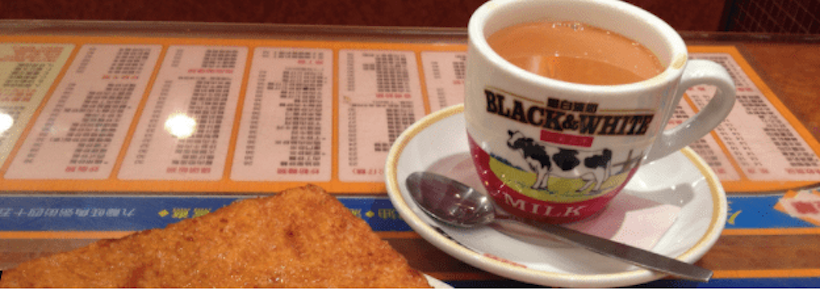
Delicious loanwords in Cantonese – Rosalyn Shih

Cantonese has quite a few loanwords borrowed from English that have slipped into everyday usage. The best example is probably dik1 si2 的士 for “taxi,” hence people saying daa2 dik1 打的 for “hail a cab” as far north as Beijing, where it’s Mandarinzed as dǎ dī 打的. Chinglish is also pretty standard, especially among trendy teenagers and work colleagues, who might say “send go3 email bei1 ngo5 laa1 (sendemail卑我啦) for “send me an email.”

But the biggest number of loanwords has to be for imported foods. The Cantonese-speaking region of southern China – Guangdong Province, Hong Kong and Macau – is stereotyped for its fondness of eating everything from snake to civet cat, but we’ve embraced Western food too. Many of our names for those foods are also imported, and it’s safe to assume that many of those words originated during Britain’s rule of Hong Kong, before making their way to the mainland.

Chinese Corner

The Said Unsaid

When Mandarin means more than you think – Karin Malmstrom and Nancy Nash

It is always said, and it’s usually true, that méiyǒu is the first phrase a visitor learns in China. So often is it heard, it may be the only Chinese phrase that many visitors remember. But méiyǒu can mean more than “not have”…

Méi yǒu (没有) – “not have”

  • There are none.
  • We have some, but are saving them for special customers.
  • I cannot be bothered to find any because I have no incentive to do so.
  • If you are persistent enough to hang around and ask a few more times, I may be able to locate some.