Essays

Is Coronavirus China’s Chernobyl?

Where similarities between the two disasters begin and end – Olivia Humphrey

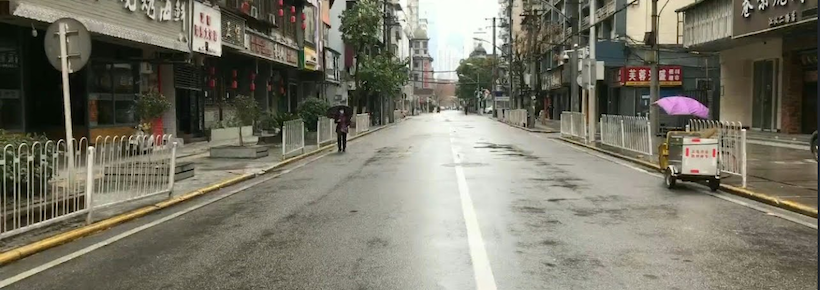
Of all the images to hit the mainstream media over the past few weeks, some of the most arresting have featured Wuhan’s deserted streets during the coronavirus epidemic. These photographs take a city of eight million and reduce it to a ghost-town. In these still moments, it is hard not to think of another ghost-town – one that has actually been frozen in time, an ashy monument to a flailing communist superpower that mishandled a catastrophic crisis. For years, the empty factories, homes and schools of Pripyat were little more than a man-made playground for wildlife, tainted by plumes of plutonium. More recently, drones have been able to venture in. They have recorded beautiful and sad footage of what a town becomes when its people are suddenly wiped away: a ghostly observation wheel; a dodgem funfair ride overgrown with plants; a giant rusting hammer and sickle.

The Chernobyl-coronavirus analogy has not been lost on the media. Since the outbreak of the virus, and especially in February, journalists have pointed out parallels. First and foremost is the health toll, and how the damage proliferated. The radiation pollution that emitted from Ukraine in 1986 as a result of reactor 4’s meltdown nestled, quietly and terrifyingly, into millions of bodies. It is too early to tell the cost of coronavirus, but the fact that it also can spread silently, through people who are pre-symptomatic, gives it that same edge of phantom menace.
Essays

Being Twenty-One During Coronavirus

Advice for students out of school, from Shi Tiesheng’s celebrated essay – Nick Admussen

Ed: Nick Admussen is an associate professor of Chinese Literature and Culture at Cornell University, where all classes were cancelled last Friday. He penned this letter, edited for publication, to his students before leaving his desk.

As cases of Covid-19 spread and we begin a period of social distancing, I want to give you my argument for continuing to do the two things university was designed for: to read and to write. Colleges often present themselves to students as a package excursion for youth: open quadrangles, energetic friends and lovers, deep conversation, light beer, live music, parties. It is that, and much more. Yet my colleagues and I didn’t become literature professors – we didn’t become literate – by going to class. We learned what we know in rooms that lacked conversation, friends, and open doors.

Today I’ve been rereading the Chinese writer Shi Tiesheng, a Beijing native who was assigned to rural labor during the Cultural Revolution, when at the age of 21 his spine was injured in an accident and he was rendered paraplegic. His 1991 essay ‘The Year of Being Twenty-One’, translated by Dave Haysom, records his struggles to come to terms with the new limits on his mobility and his future. In the essay, he watches carefully as the other patients in hospital respond to their own illnesses, and to the social and emotional sicknesses that constrain them. From his sickbed, Shi talks with a man with aphasia (“Bed Two”) who has lost all nouns. He remembers a seven-year old boy who fell off a truck and never walked again. And he tells of a pair of lovers pulled apart by an accident, and more. Their stories leap off the page, as if there is something bigger behind them, laboring to push its way through.

Reviews

The Party, the Power and the Praxis

Mike Cormack reviews China’s Dream by Kerry Brown

Kerry Brown’s productivity puts the rest of us to shame. Just in the past few years the Professor of Chinese Studies at King's College London has published CEO, China: The Rise of Xi Jinping (2016), China's World: What Does China Want? (2017), which I reviewed in these pages, The New Emperors: Power and the Princelings in China (2018) and The World According to Xi (2018). All have received strong plaudits, too, making Brown a one-man cottage industry informing, educating and entertaining us about modern China.

Last year he published China’s Dream: The Culture of Chinese Communism and The Secret Sources of its Power. Looking at the title, I wondered if the book might perhaps retread parts of CEO, China and The New Emperors. (How else could he maintain this output?) But I was wrong. China’s Dream is a deep analysis of the culture of the Chinese Communist Party (CCP) and how it uses this to maintain power. If the renowned The Party: The Secret World of China’s Communist Rulers (2012) by Richard McGregor established the skeleton of the CCP and its links to the broader Chinese state, Brown’s book is an attempt to put flesh on those bones. It does this by a deep-bore examination of the party’s moral and ethical stances, as well as its use of culture to maintain a remarkable hold on power and sustain its appeal to Chinese citizens – whether urban or rural, Party members or the broader masses.

China Conversations

Guo Yuhua: China’s Suffering Class

An anthropologist of China’s underclasses talks to Jonathan Chatwin

Guo Yuhua is Professor of Anthropology at Tsinghua University in Beijing. She has spent the majority of her career researching and writing about the lives of rural Chinese people. Her work The Narration of the Peasant: How Can ‘Suffering’ Become History? is based on oral histories collected during her research in Ji village in northern Shaanxi province. She has written: “one of the ways to defeat the hegemony of official texts and official discourse is to write the history of ordinary people, the history of the ‘sufferers’.”

Professor Guo is currently undertaking research on food safety and peasant workers suffering from pneumoconiosis, a lung disease which affects workers in coal mines, quarries and foundries. Guo’s books are banned in China. As part of the China Conversations series, Guo Yuhua spoke from Beijing with writer Jonathan Chatwin.

Excerpts

Formosa Fraud

George Psalmanazar’s 18th century fabulations of Taiwan – Graham Earnshaw

EXCERPTED FROM FORMOSA FRAUD

Taiwan is the topic on everyone’s lips. What’s going on there? Who does the island rightfully belong to? How important is the influence of the West? What is the real culture of the island’s residents? The debate rages.

Is this the early twenty-first century? No. It’s London more than three hundred years ago, at the beginning of the eighteenth century.

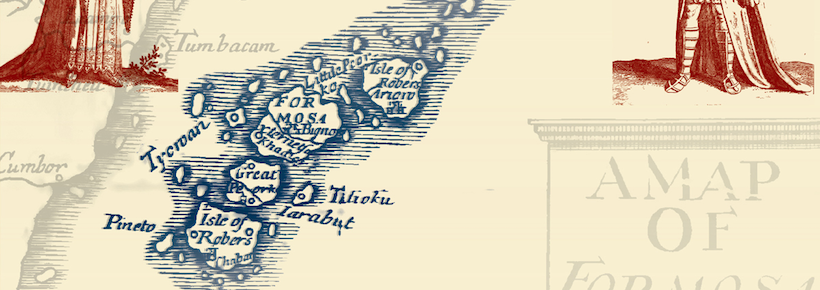
In 1704, a man appeared in England with the most extraordinary stories about Taiwan, or Formosa as it was then called. How eighteen-thousand boys are killed every year as part of Formosan religious ceremonies; the island is a major producer of gold and silver; and Catholic priests are causing trouble there.

He said his name was George Psalmanazar, and his information about Formosa – it’s culture, history, society and economy – captivated the English reading public. He published a book on the topic which went into a second edition, he gave speeches, he was fêted by the Bishop of London, he went to Oxford to teach Formosan. There was just one problem with the situation: his whole story was fake.