Oolong Podcast

Afra Wong on Podcasting in Chinese

AN EPISODE OF THE OOLONG PODCAST

Loud Murmurs is one of the only podcasts in Mandarin that discusses American pop culture. Run by a team of Chinese-American women, the podcast covers topics ranging from deconstructing Netflix shows to discussing Crazy Rich Asians. Afra Wong, one of the key members of Loud Murmurs, tells Lev Nachman what their podcast is about, how she and her team decided to start the podcast, and what some of the ins and outs of running a Chinese podcast are like.

Essays

Bare Branches

How Singles Day in China forgot its origins – Alec Ash


Every November 11th, while Brits wear poppies to remember the dead of WWI, the China news cycle [rotates] back around to [Singles Day] or ‘Double Eleven’: the online shopping bonanza, Black Friday on acid, pioneered by e-commerce company Alibaba. Last year, over [$30 billion] worth of goods were sold in 24 hours, and the early hours of this year’s discounts (sales start at midnight) are already 32% higher. But Singles Day hasn't always been about sales. The only figure worth crunching when it started was the loneliest number, number one.

In 1993, the story goes, four Nanjing University students were slouching on their dorm bunkbeds, slurping instant noodles, drinking beer, chain-smoking and complaining that the ladies weren’t falling over each other to get at them. They were ‘bare branches’, they grumbled, using a word for single men, guanggun, that still carried stigma. “From today,” one of them said, pleased by the recurring bare branch of the number one in that day’s date, “November 11th will be called Singles Day.”

Fiction

Going Home

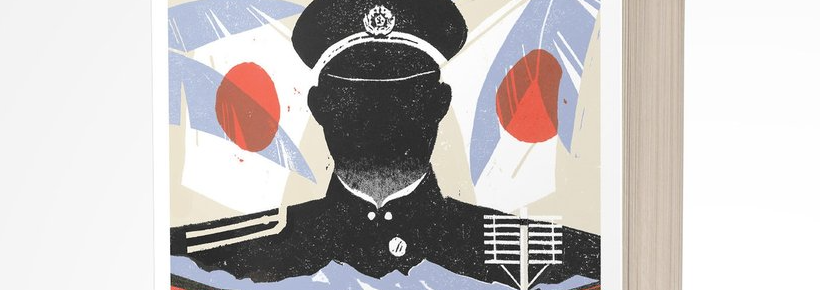
Taiwanese fiction by Loa Ho, translated by Darryl Sterk

Editor’s note: Loa Ho (賴和), also known as Lazy Cloud, was a Taiwanese poet, born in 1894. A doctor by profession, it was his contribution to the literary republic – overlooked today – that led him to be hailed as the "father of modern Taiwanese literature." This 1932 story, translated and republished in the new collection Scales of Injustice, was first published in the founding issue of Voice of the South (南音), a literary journal where Taiwanese cultural elites hoped to communicate with the wider public.

If a product is not up to standard in the factory you still have the chance to fix it, but if it makes it all the way to the market and customers don’t like it, it’s useless and will get thrown away. That’s how I felt when I arrived home after graduating from university, like a reject. It was an unpleasant homecoming.

Several days after I got home I lost the courage to go out, because every time I did I met relatives or friends who would say, “Congratulations, you graduated!” Which I found terrifying, because it would remind me that I had left the factory and was en route to the market. In the first few days, of course, I was happy to be reunited with my family after a long absence.

Poetry

Poetry Between Languages

New poems from Spittoon magazine, by Li Jiaoyang and Chen Bo

Writing poetry in a second language is like floating in zero gravity; it is freeing and terrifying at the same time. Many jump out of their mother tongue, but few find grace in the free-fall. Li Jiaoyang and Chen Bo – both native Mandarin Chinese speakers whose English poems are published below – have each found a distinct voice in a foreign tongue. Not only that: they have succeeded in presenting the English language to native speakers as something wild and new.

These two writers demonstrate clearly why to learn a new language is to see the world in a different way. It is not hard to see the productive potential that language learning has for poetry, whose gift is to show us the world in new ways, and also to understand how a Chinese-speaking poet might, upon learning English, see a fresh new set of tools with which to paint.

Poetry

A Century of China’s New Poetry

Six poems by Mo Yan and others, spanning generations – edited by Ming Di

China’s New Poetry Movement was started in Beijing in 1917 by Hu Shi (1891–1962) and reinforced by the May 4th Movement in 1919. But what was its esthetic goal, what influence does it still exert on cultural life in China, and what has been challenged? New Poetry From China: 1917-2017, a new anthology, tries to address the many dimensions of the movement, covering works from most of the important poets still relevant today. 120 poets were selected, from Hu Shi to contemporary voices, including dissident poets. Mo Yan and Liu Xiaobo are back to back on the pages, and many other poets are translated into English for the first time. Two major traditions within the New Poetry Movement have been pushing each other forward: Spoken Language Poetry and Neoclassical Poetry, both are experimental in language and form but with different approaches. We hope you enjoy this small sample of six poems below, representing the span of different generations of poets, from Zheng Min, born in 1920, to Su Xiaoyan born in 1992. – Ming Di