Essays

Medical Team 19

The Quaker aid group in China that the West forgot – Christopher Magoon

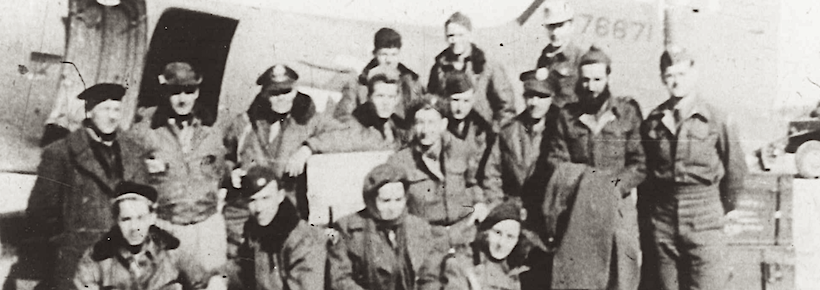
When the Friends Ambulance Unit Medical Team 19 – a Quaker-organized aid group – left China, memory of their humanitarian mission was nearly erased. Like many Western aid organisations, they traveled thousands of miles and saved countless lives during the Chinese Civil War. Yet unlike the others, they served Mao Zedong’s Communist forces.

The seven-member pacifist group, called Medical Team 19 or MT19 for short, built mobile hospitals in caves, completely cut off from news of the outside world, often traveling at night to avoid detection. While serving, the volunteers were widely praised by Western powers and the Chinese Communist Party alike. But as post-World War II tensions congealed into the Cold War, there was little room for humanitarian overtures. They were unceremoniously forced out of China, and became a political liability on both sides of the Pacific.

China Conversations

Julia Lovell: Translating China’s Past

Jonathan Chatwin talks to the award-winning historian and translator


Julia Lovell is Professor of Modern China at Birkbeck College, University of London. She is the author of The Politics of Cultural Capital: China’s Quest for a Nobel Prize in Literature, The Great Wall, and The Opium War. She is also a translator of Chinese fiction; her translations include The Real Story of Ah Q and Other Tales of China by Lu Xun and Serve the People by Yan Lianke. She writes about China for several newspapers, including The Guardian, Financial Times, The New York Times and The Wall Street Journal. Writer Jonathan Chatwin talked to her about her route into studying China, the relationship between translation and writing history, and how she approached the researching of the global stories in her new book Maoism.

What first drew you towards studying Chinese at university? Had you had exposure to Chinese language and culture before then?

As an undergraduate at Cambridge, I made the decision to switch from History to Chinese Studies in 1995. Chinese was still very unknown to me at that point, and I had had zero exposure to Chinese language and culture before I made the decision. 

Reviews

Pulling Punches

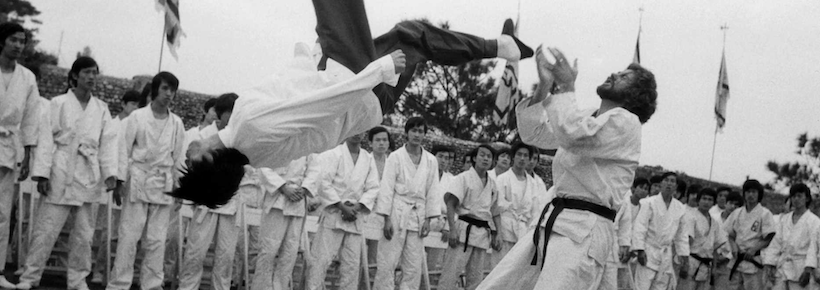
Yifu Dong reviews a new biography of Bruce Lee

Today it takes most people quite a bit of imagination to see traditional Chinese martial arts – kung fu – as an effective style of fighting. Back in my Beijing secondary school, my classmates and I learned kung fu routines alongside calisthenics, as part of daily exercises. We swung our fists and kicked our legs simply for the sake of stretching. On Chinese TV, kung fu dazzles, but everyone knows what happens in real life when half a dozen enemies encircle a solitary fighter. In recent years, Chinese mixed martial arts (MMA) fighters challenged kung fu masters, and almost every fight ended within seconds with the man of tradition lying on the floor, or bleeding, or both. Even Shaolin Temple, a soi-disant holy site of kung fu in Henan province, has evolved into a commercialized tourist trap.

Essays

The Origins of China’s National Drink

Baijiu and the myth of the national liquor – Derek Sandhaus

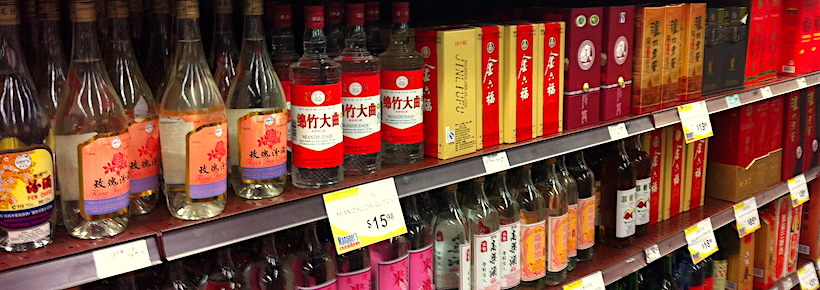
No one casually happens upon Xinghuacun, but many are driven there by drink. A dusty backwater in north-central China’s Shanxi province, for centuries its residents have made a dry and herbaceous distilled spirit called fenjiu. The road in from the provincial capital of Taiyuan presents a bleak, repetitive landscape of belching smokestacks punctuated by the occasional missionary church steeple, leftovers from another time. Turning off the main drag toward the town’s largest distillery, I travelled down Jiudu Dadao, or “Liquor Capital Avenue.” I was here in search of the birthplace of baijiu, China's beloved national spirit.

Yet thousands of miles southwest, nestled deep in the mountains of Guizhou province, I later found another Liquor Capital Avenue outside of Maotai, whose namesake distillery produces a pungent savory baijiu sometimes affectionally known as the guojiu, or “national liquor.” You can smell the liquor even before you see the factories.

Bangdong

The road to Bangdong

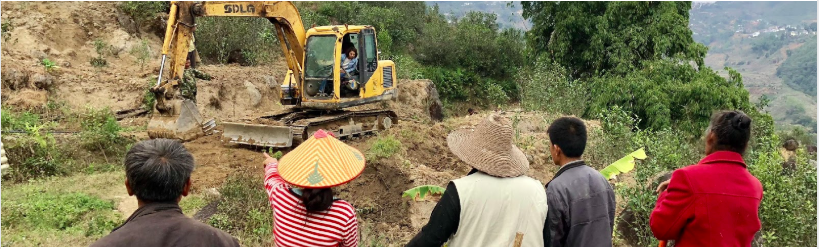
How rural transportation networks are changing lives in Yunnan – Matthew Chitwood

Ed: By popular request, we are running a further selection of dispatches from Bangdong, a village in rural Yunnan province, by Matthew Chitwood, a research fellow with the Institute of Current World Affairs who has been living there for two years since fall 2017, researching rural perspectives on life and China’s economic transformations. – Alec Ash

My stomach turned as I stepped aboard. It had been over ten years since my first overnight bus ride in China and the scene before me instantly brought back why that time had also been my last. A row of metal bunk beds lined the windows of both sides of the bus and a third row stretched down the middle. The beds were no wider than my shoulders, each one with its own mint green travel pillow and folded orange blanket. The driver handed me a small plastic bag as I boarded, which seemed both thoughtful and ominous. I was finally on the road to Bangdong.