

China Conversations

Rana Mitter: Pushing the Limit

Part two of a conversation with Jonathan Chatwin

Rana Mitter is Professor of the History and Politics of Modern China at Oxford University, and Director of the Oxford China Centre. His books include Forgotten Ally: China’s World War II, 1937-45, A Bitter Revolution: China's Struggle with the Modern World and Modern China: A Very Short Introduction. In part of two of this interview, Jonathan Chatwin asked him about his research methods and his current work on the post-World War II period. Read part one here.

How challenging is it to get archival access in China now, and has that changed in the Xi Jinping era?

For studying the Republican period, I would say that broadly it is more challenging than it was 20 years ago. It is probably less challenging than it is for say, doing a history of the Mao period, which is one of the most sensitive areas.

Letters, Reviews

How an Academic Journal Censored My Review on Xinjiang

A squelched review of Oil and Water by Tom Cliff – Timothy Grose

On January 1, 2018, I received a request from China and Asia: A Journal in Historical Studies, a new journal sponsored by the academic publisher Brill, a respected Dutch publishing house with some 275 journals under its aegis, which claims “over three centuries of scholarly publishing.” The request from the journal was to review Tom Cliff’s book Oil and Water – an ethnography about Han settler experiences in the Xinjiang Uyghur Autonomous Region. I agreed, and the review had a generous November 2018 deadline as the journal would publish its first edition in early 2019. The journal’s book review editor is a trusted friend, and I was pleased to read China and Asia’s mission statement: “Its purpose is to promote communication and exchange among the global Asian studies community, especially among scholars based in Asian countries.”

After receiving several deadline reminders, I submitted the review on November 7, 2018. During those eleven months, the deteriorating situation in Xinjiang weighed heavily on my mind, with hundreds of thousands of ethnic Uyghurs reported to be detained in re-education camps

Dispatches

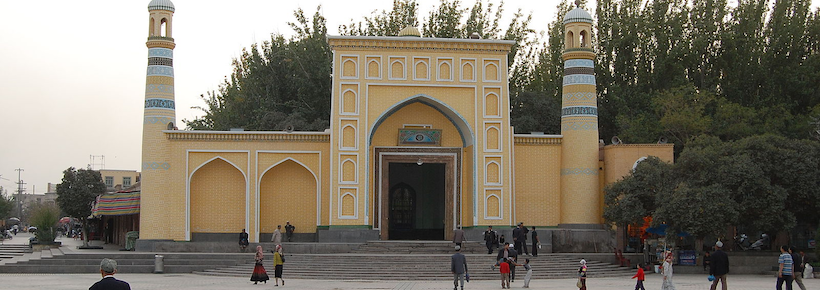
Ramadan in Kashgar

Searching for a morsel in Xinjiang – Brent Crane

Editor’s note: The Chinese authorities have often restricted Uyghurs from fasting during Ramadan. In 2014, while the author of this dispatch wandered hungrily through the streets of Kashgar, a large swath of Xinjiang’s population was forced to eat during the day. Last year, Radio Free Asia reported that Kashgari schoolchildren and their parents had to sign pledges affirming that they would not fast. This indignity is just one part of an ongoing campaign of repression that has swept one million people into internment camps. The story below is a time capsule of Uyghur life, and of the connections that we can form across religious and cultural divides, if only we are given the chance. – Anne Henochowicz

Unless you are in Kashgar during Ramadan, as a foreigner you will never go hungry in China. Eating is a national obsession, and takes on an almost sacred air. Cheap restaurants are everywhere, people are constantly talking about food, and Chinese hosts will bend over backwards to make sure you’ve eaten enough. Often I'm confronted by a fierce jabbing of chopsticks in the direction of a half-finished communal dish and the barking command, “Eat!”

So I was surprised to find myself roaming the twisting streets of Kashgar’s atmospheric old town with a rumbling stomach and diminishing chances of finding an open restaurant.

Dispatches

New Rites for Tomb Sweeping Festival

An age-old ritual changes with the times – Matthew Chitwood

A Cloud Tobacco cigarette smolders on Shi Wenxian’s tomb. The lit end hangs off the stone ledge, slowly burning down as if Shi’s spirit were enjoying a long-awaited smoke. All around, people are in motion. A cousin pulls pine needles from the top of the tomb while another hacks away tall, dry grass with a hand scythe. An aunt heats a blackened kettle of water over a makeshift fire as mothers and toddlers hide in the shade, dividing fake money into sheets of four so they’re ready for burning. Li Jinlan, the 79 year-old matriarch, meanwhile ignites a pack of incense and begins placing the bright pink sticks around the base of her son’s tomb.

China Conversations

Rana Mitter: Challenge of the Void

Part one of a conversation with Jonathan Chatwin

Rana Mitter is Professor of the History and Politics of Modern China at Oxford University and Director of the Oxford China Centre. His most recent book, Forgotten Ally: China’s World War II, 1937-45, was named as a 2013 Book of the Year by the Financial Times and the Economist, and won the 2014 Royal United Services Institute/Duke of Westminster’s Medal for Military Literature. In the first half of this two-part interview, Jonathan Chatwin sat down with Mitter in Oxford to discuss his route into Chinese history and the complexities of the Republican era in China.

To start with a fairly generic but important question: how did you become interested in studying China?

There wasn't one single moment that I can remember. But in a sense, I think my interest was the product of something a bit odd, which was a negative.