
Essays

Belgrade to Beijing and Back Again

The 1999 Chinese embassy bombing, revisited – Sale Lilly

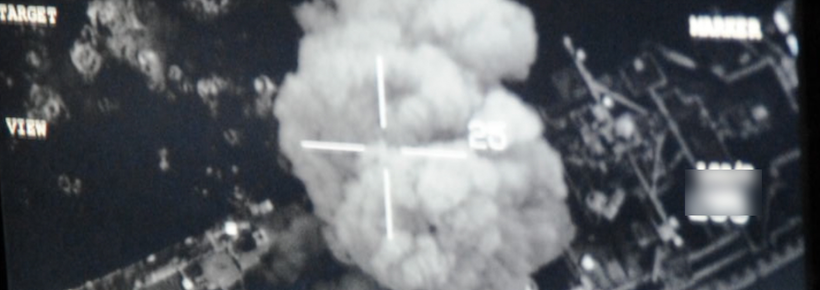
Warheads on Foreheads. I suspect that locution – a coarse motto of American military targeting cells – is as unfamiliar to Chinese history students as a Chinese idiom might be to American military personnel. The phrase implies that American bombs fall squarely on their intended target, and nowhere else. But that has not always been the case. May 7, 2019 marks the 20th anniversary of the US bombing of the Chinese embassy in Belgrade, Serbia. Three Chinese citizens died in the bombing, itself a part of a much larger military and diplomatic campaign led by the US to compel the Yugoslav government to cease hostilities in Kosovo. The US characterized the strike in sterile terms as “an error” and a targeting “anomaly.”

The Chinese government unequivocally disagreed, and claimed the strike was an intentional act of American malice. The bombing generated a crisis in Sino-American relations and a related protest movement across China. The same weekend of the strike in 1999, I was busy thumbing through stacks of promotional military pamphlets from the US military.
Essays

May Fourth for the World

China's May 4th 1919 protests envisaged as a national and international movement – Shakhar Rahav

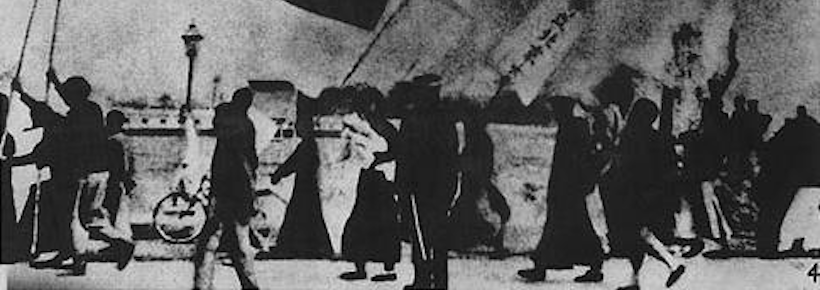
On 4 May 1919 approximately 3000 students from over a dozen institutions took to the streets of Beijing to protest news that the Paris peace conference was rejecting Chinese demands to force Japan to cede control over territories it held in Shandong Province. The term “May Fourth” or “May Fourth Movement” has become an icon in Chinese history, and has come to denote that demonstration and those that followed, including a general strike that paralyzed Shanghai that June. The term is also routinely used in a broader chronological sense: to invoke the entire period of cultural and political unrest that lasted from 1915 until 1923. In both cases Beijing and Shanghai are usually the focus of attention.  My argument here, though, is that just as it May Fourth’s significance lies in the events of more than one or two months, it also involves more than just one or two places. A broader geographical as well as temporal perspective is needed.

Dispatches

The Case of the Missing Migrants

“Teaconomics” transforms a Chinese village – Matthew Chitwood

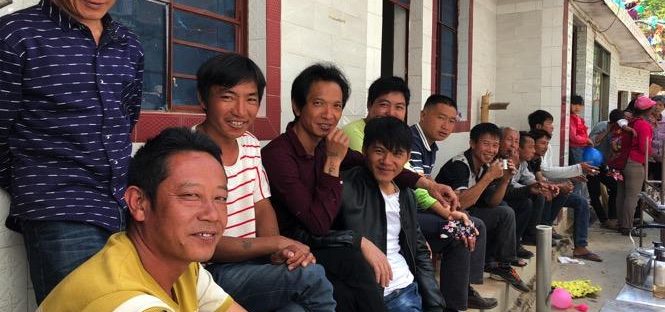
Editor’s note: We’re pleased to present a new mini-series by Matthew Chitwood, a research fellow with the Institute of Current World Affairs, who is living for two years in Bangdong Village in southwestern Yunnan Province, since fall 2017, researching rural perspectives on life and China’s economic transformations. Each Thursday for the next four weeks, we will feature a new essay from Matt’s blog, examining a different aspect of life in Bangdong loosely organized around China’s four pillars of development: economic, social, environmental and political. – Alec Ash

The blood gushed out with each squeal, dark like vintage Burgundy. Each labored breath cut off the flow, like someone pinching a hose, until a new squeal – piercing and terrifying – opened the floodgates anew. It spilled into an aluminum bowl, turning a bright red, like frothy cooling Jell-O.

That is not what I was expecting, although I suppose it should have been. I was attending a village shazhu fan, or “pig-slaughtering feast,” for Chinese New Year. It was an educational moment for me and a wide-eyed three-year-old next to me. Moments earlier, the boy’s father, Li Rugui, a local tea farmer and the host of our feast, had led the doomed animal from its concrete pen next to their home. Li Rugui was joined by three buddies, with one man holding each ear and two at the tail. The pig made its discomfort clear.

Little Red Podcast

Hotpot Wars

Tensions bubble in the battle for China’s Culinary Soul

AN EPISODE OF THE LITTLE RED PODCAST

China has been engulfed by a controversy that strikes at the very heart of the nation—forget the South China Sea, rampant human rights abuses, even a looming economic crash. Last month food critic Chua Lam, otherwise known as the Food God, called for the end to the PRC’s most beloved dining craze: hot pot. The backlash has been immense, with enraged Weibo users calling for Chua Lam’s abolition. To discuss whether hotpot is indeed an uncultured blight on China’s rich culinary landscape, cookbook author extraordinaire Fuchsia Dunlop joins Louisa and Graeme. Also there's a chance to win a Little Red Podcast mug in our first ever competition. Snap a pic of the dish you'd like to disappear and send it to us on Twitter or Facebook to be a contender. ∎

Reviews

Imagining Empresses

Tobie Meyer-Fong reviews the exhibit Empresses of China’s Forbidden City

An older woman with a strong nose, auspicious ears, finely arched brows and a tight, subtle smile looks out from the cover of the exhibition catalog of Empresses of China’s Forbidden City, 1644-1912. She wears a richly embroidered blue vest over an imperial yellow robe, both decorated with sinuous dragons. Soft sable fur trims her hat, collar, and the distinctive hoof-shaped cuffs of Manchu imperial costume. An abundance of pearls from the Manchu homeland completes the ensemble. Her attire denotes status and ethnic heritage, and hints at the possibility of power. Her gaze suggests the opportunity for a direct encounter.