
Voices from Tibet – translated by Bhuchung D. Sonam
A Stranger
This is my guesthouse
Where I close my eyes for a day.
Stranger,
Please come in,
Sit on this chair,
Enjoy a cigarette.

A Stranger
This is my guesthouse
Where I close my eyes for a day.
Stranger,
Please come in,
Sit on this chair,
Enjoy a cigarette.

The past year has been an exciting one for Tibetan literature in English translation. Not only was a collection of twenty-one Tibetan short stories, Old Demons, New Deities, released in October, but at the same time an anthology of contemporary Tibetan poetry, Burning the Sun’s Braids, was published by the independent imprint Blackneck Books. These collections act as companions for understanding the literature being written by Tibetans today, both prose and poetry.
While there have been smatterings of Tibetan poetry in translation across the web for a while now – for example on the excellent website High Peaks, Pure Earth – Burning the Sun’s Braids is the first book devoted to new poetry written inside Tibet
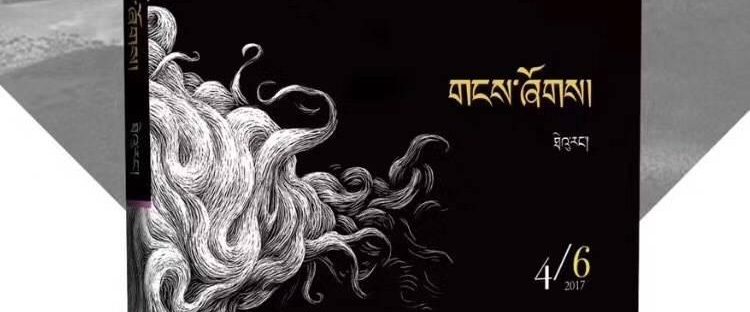
Liberty
The vast land is stifled in suffocation
The rocks splintered by the rays of the sun
Slumber in the desert of time.
Darkness, like a child wont to fabrication
Runs in your vicinity whispering secrets.

Better known by his pseudonym “Theurang” – a mysterious imp-like creature living in high mountains, known for its mischievous intrusion in human settlements – Tashi Rabten is one of the most prominent and widely read young contemporary poets in Tibetan literary circles today.
Theurang rose to literary stardom as a student of literature at the Northwestern University for Nationalities in Gansu Province, around the politically tumultuous period of 2008, when riots shook the Tibetan Plateau. Recording his sentiments and reflections on the 2008 uprisings and the subsequent crackdown campaigns, Theurang published Written in Blood (Khrag Yig), a collection of poems and essays which was well received before it was banned. His involvement in student protests, his poetry and publications in the now-banned literary journal Eastern Conch Mountain (Shar Dung Ri), and his literary activities in general, led to his arrest in 2010 and a four-year prison sentence.

On a visit in April 2018 to the Uyghur homeland in Northwest China, I was amazed by the number of checkpoints that turn every city and town into a maze of ethno-racial profiling and ID scans. In some areas, the checkpoints are every several hundred meters. The checkpoints are only for those who pass as Uyghur. Han folks and obvious foreigners are usually directed to walk through the exits of the checkpoints with the wave of a hand. The checkpoints are not for them.
Since 2009 there have been a number of large-scale violent incidents involving Uyghurs, state security and Han Chinese civilians. Since 2014 the state has conducted a so-called People’s War on Terror that has subjected Uyghurs between the ages of 15-45 to intense scrutiny. As a result of this campaign, the state has detained hundreds of thousands of young Uyghurs in a re-education camp system while radically increasing the police presence.