
Interviews

Making Leaps

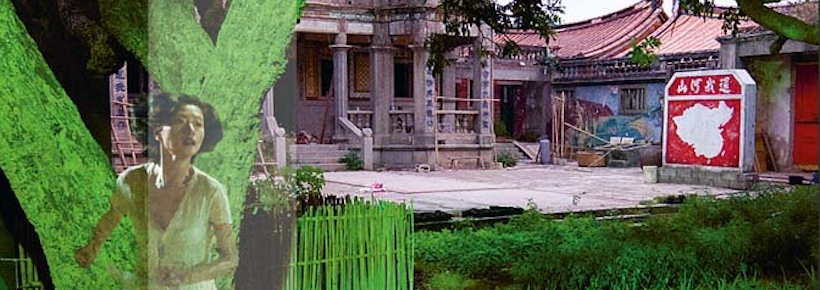
Amy Hawkins talks to Zhang Wei, director of China’s new award-winning trans film

In 2007, a young man name Liu Ting was awarded China’s highest honor for filial piety. Liu’s achievement had been to care for his ailing mother while he was a university student in Zhejiang, carrying her to and from hospital every day when his father left the family after a job loss.

Seven years later, Liu made the headlines again when he came out as transgender, and revealed he had been trying on his mother’s lipstick and clothes since he was a child. “If he was a nobody, it wouldn’t have been big news,” says the film director Zhang Wei via WeChat video call from his hotel room in Busan, South Korea, “but people were shocked.”
Little Red Podcast

Geopolitics on the New Silk Road

Is the Belt and Road Initiative China’s Marshall plan?


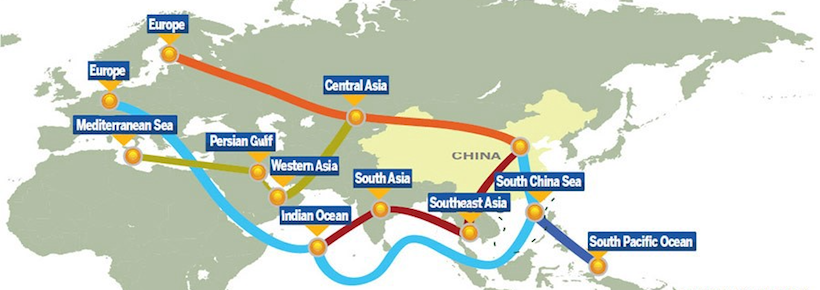
There’s no escaping China’s Belt and Road Initiative. It’s been written into China’s constitution, and more than 70 countries from Pakistan to Papua New Guinea have signed up. But what is it? A modern-era Marshall Plan, a geopolitical bid for China to build a new international power bloc, a new model for Chinese colonialism, or an all-encompassing bumper sticker for Chinese-brokered development projects? To unpack the motivations behind Xi Jinping’s highest profile foreign policy initiative, Louisa Lim and Graeme Smith are joined by Peter Cai of the Lowy Institute and Dirk van der Kley from the Australian National University, in this episode of the Little Red Podcast:


Chinese Corner

Two Shades of Pleasure

How ancient Chinese thought influenced pleasure and delight – Michael Nylan

“Pleasure,” wrote Oscar Wilde, the 19th-century English aesthete, “is the only thing worth having a theory about.” More recently, Andre Malraux asked in The Temptation of the West, “Of all his ideas, is there any one more revealing of a man’s sensibilities than his concept of pleasure?” Both formulations could be plausibly ascribed to some of the most important classical philosophers in China, who deemed pleasure to be one of the most effective tools to motivate right action, as each defined it, as well as to discern a person’s character.

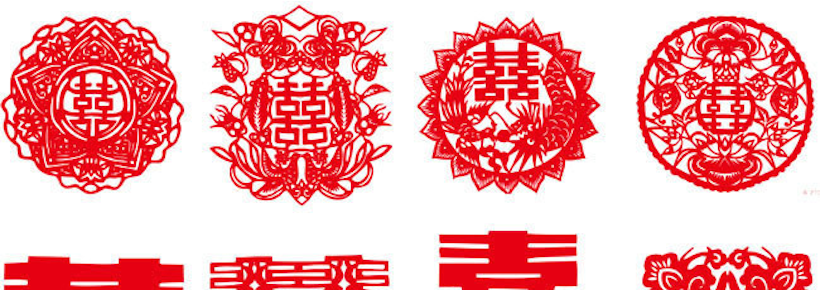
To signify acts of pleasure-seeking, pleasure-taking, and imparting pleasure, a wide range of thinkers from the fourth century BCE to the eleventh century CE deployed the single graph, .

Reviews

At the Edge

Joshua Bird reviews China at its Limits, by Matthias Messmer and Hsin-Mei Chuang


China shares its borders with 14 other countries, more than almost any other nation. Its near neighbors represent a diverse collection, from dominant powers such as Russia and India, to the smaller emerging nations of Laos and Bhutan. Throughout China’s history, it is through these borders that the influencing forces of trade, ideology and imperialism have traveled. China’s border regions have resumed their importance in recent years, with political protest among the country’s ethnic minorities in Xinjiang and Tibet, and the development of the Belt and Road Initiative – which seeks to further bind China’s neighbors to its economic agenda through the creation of a “New Silk Road.” China’s borders represent an opportunity for trade and cultural exchange, but also a risk for political agitation, terrorism and even military conflict.

Poetry

Waterfall of Youth

A seminal Tibetan poem, in a new translation by Lowell Cook

The tragic yet prolific life of Dondrup Gyal (1953-1985) was one of foremost catalysts for the birth of modern literature in Tibet. Having grown up during the Cultural Revolution, Dondrup Gyal was one of the first Tibetans to attend Chinese universities in the Reform and Opening era. Not only did studying with renowned Tibetan and Chinese scholars at the Central Nationalities Institute in Beijing hone his writings skills and give him access to a new world of literature, it also shaped his progressive vision for the Tibetans. It was this combination of literary skill and innovative thinking that Gyal would soon become famous for. Unfortunately, his progressive views also made him a target for criticism and ostracization in the highly conservative Tibetan society of the day. This, in addition to strained relationships with colleagues, local officials, and his wife Yumkyi, contributed to his suicide in 1985 at the age of 32. Despite Gyal’s short life, his collected works contain six volumes of poetry, fiction and essays.