Reviews

Tough Questions

Grace Jackson reviews The China Questions, from Harvard University Press

In 1955, Professor John King Fairbank established the Center for Asian Research at Harvard not to train scholars per se, but to educate and prepare a new generation of public servants for engagement with Chairman Mao’s China. Sinology was already an established academic discipline in Europe and the United States, tracing a lineage from the Jesuit missionaries through to the great nineteenth century translators such as James Legge, Thomas Wade and Herbert Giles. But unlike the Sinologists, who approached Chinese civilization through its ancient texts, the China Hands that Fairbank would train at Harvard were multidisciplinary men – in those days, it was primarily men – of the world: aspiring journalists, diplomats and policymakers.
Essays

The Disappearance of Rahile Dawut

A vanished professor, remembered by students and colleagues – Darren Byler

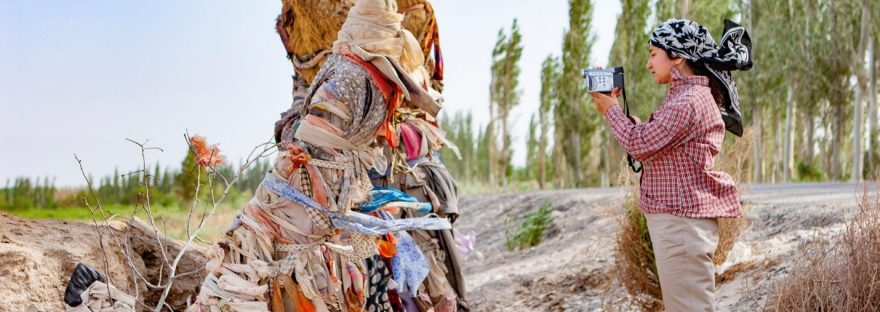
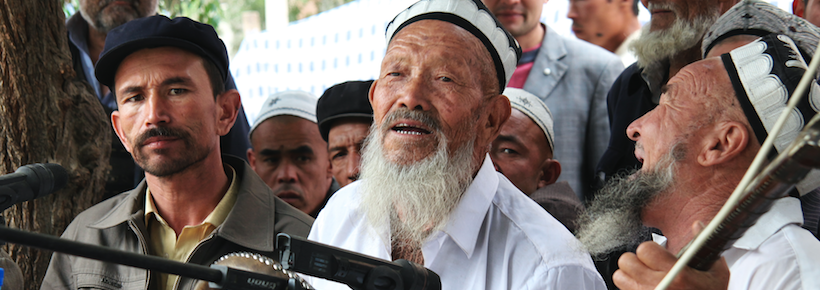
On December 4, 2017, the disappearance of Professor Rahile Dawut, an eminent scholar of the Uyghur ethnic minority which she herself belongs to, sent quiet shockwaves among her students and colleagues around the world. On that day she had packed her bags for a flight to Beijing from Urumqi, the capital of the Xinjiang Uyghur Autonomous Region, where the majority of Uyghurs live, and has not been seen since. Presumably she is being held in detention. The cryptic text messages a colleague sent regarding what happened did not provide many details. They ended with the message, “I am going to delete my VPN [virtual private network, for communicating behind the Chinese firewall] and never use it again. So please if you care about people here, stop asking questions.”

Dawut’s Uyghur students care too deeply to stop asking questions, but for many months they have kept their questions quiet.

Little Red Podcast

War on the Uyghurs

An unfolding crisis in Xinjiang – Louisa Lim

The little boy sat mute beside his father. Just three years old, he was completely still, not fidgeting, just staring straight ahead. His sister, four years old, sobs uncontrollably through the night, and refuses to eat. There is no comfort for these children. Though they are in Adelaide, Australia, their mother – an ethnic Uyghur – is in a re-education camp in Xinjiang. Their father’s voice breaks when he says, through a translator, “I had to tell them your Mum has to be kept by Chinese authorities. A little child – what can he understand?”

Q&A

Personal, Poetical, Political

Nick Stember asks Christopher Doyle about The Hong Kong Trilogy

Admittedly, I’m a huge fan of your work, but I wonder with something so politically charged if you feel like people expected you to be giving answers? You know, Christopher Doyle makes a big statement, like Michael Moore or someone like that.

The point is to embrace the image: whether it’s the image on has of oneself or where one hopes to arrive – as an artist, a banker, a good mother, or whatever. It’s not how society and the tabloids need to “closet” you: it’s a volition, hope, and intention to be more than you would be alone that allows a public persona to help you to hurdle through to a very free and giving space.

Reviews

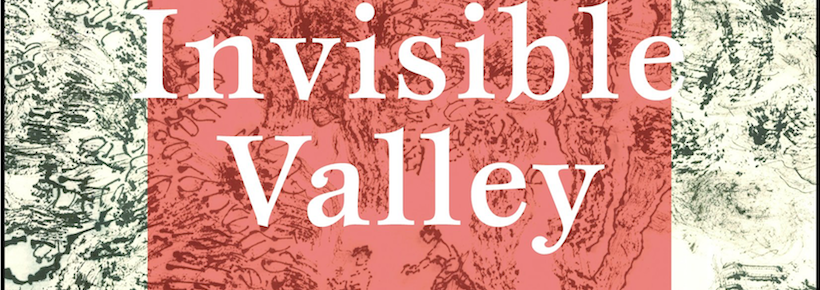
The Invisible Valley

Kevin McGeary reviews The Invisible Valley by Su Wei, translated by Austin Woerner

In a 1983 lecture at the National Word Festival in Canberra, fantasy author Alan Garner explained the importance of childhood in making someone a writer1. He recalled his own early years in England during World War II, living life on a mythic plane of absolute good against absolute evil, with survival feeling like a daily struggle. Garner claimed that this seeped into the psyches of his generation and subsequently, its writers’ work, which was profound where the literature of later generations, he argued, was trivial and effete by comparison.

At the Macao Literary Festival in 2018, translator Austin Woerner – whom I first met at a literary translation boot camp in Huangshan in 2014 – explained that his early ambition was to be a novelist, but his comfortable, suburban, American upbringing was not great fodder. Fortunately, for lovers of genre-bending, constantly surprising, and occasionally-hilarious fiction, when studying Chinese at Yale, he met Professor Su Wei.