Chinese Corner

Strokes of Genius

When Chinese characters get complicated

There's a new noodle joint on my street, and this is the sign on the window. Biángbiáng miàn is a type of flat noodle from Shaanxi province, supposedly named after the slapping biang! sound that the uncooked noodle makes when hit against the kitchen table-top to stretch it out (or the lip-smacking sound of eating them, depending on who you ask). It’s one of my favourite street dishes in China, and I’ve had a few chance encounters in this particular Beijing eatery. But the noodle is more famous for how it is written than how it tastes

Chinese Corner

Seeing Sini

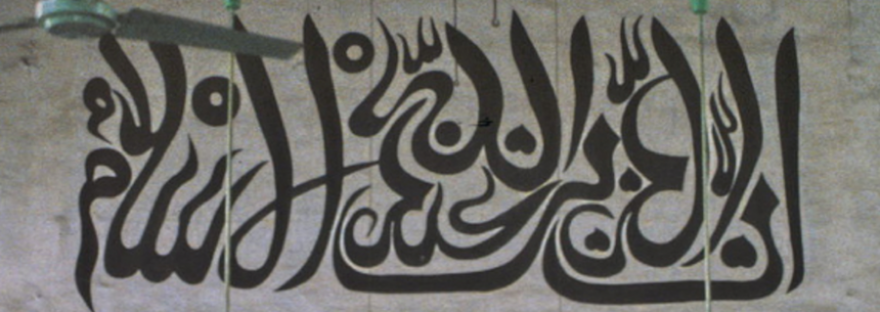
The origins of Chinese Islamic calligraphy – Eveline Chao

The next time you’re in a Chinese mosque, look up. If you’re lucky, the entrance will be adorned with Sini, a Chinese-ified version of Arabic script. (And if you won’t be near a Chinese mosque any time soon, check out Professor Dru Gladney’s photos of Sini and other Islamic art in China.) Sini appears in most mosques in eastern China, and a bit in the northwestern provinces of Shaanxi and Gansu. You’ll see it used on the tasmiya, or invocation of prayer, hanging above the entrance or in the prayer hall, and sometimes on the shahada, a profession of faith hanging in a niche that indicates the direction of prayer.

Chinese Corner

Mum’s the Word

To learn Mandarin like a child, listen first – Eveline Chao

Editor’s note: If you’re resolving to pick up Mandarin this year, Eveline Chao has some encouraging insight about language acquisition for you in today’s Chinese Corner column. No matter where you are along the learning path, we’d love to answer your burning questions about Chinese. Send your linguistic quandaries to larbchinachannel@gmail.com with the subject “Chinese Corner,” or tweet a #chinesequestion at Liz Carter @withoutdoing or myself @annemhdc. – Anne Henochowicz

Ask enough expat parents, and you’ll eventually find someone whose child, upon moving to China, spent months as a near-mute. Then one day out of the blue, they began spouting fluent streams of Mandarin.

Chinese Corner

The Law of Hobson-Jobson

What “ketchup” and “compound” have in common – by Eveline Chao

In 1886, a Scot named Henry Yule and a Brit called A.C. Burnell published Hobson-Jobson, a dictionary of words from Indian languages (and other Eastern languages like Malay and Chinese) being used by British in India. Or as Yule put it in the preface, “that class of Anglo-Indian argot which consists of Oriental words highly assimilated, perhaps by vulgar lips, to the English vernacular.”

Chinese Corner

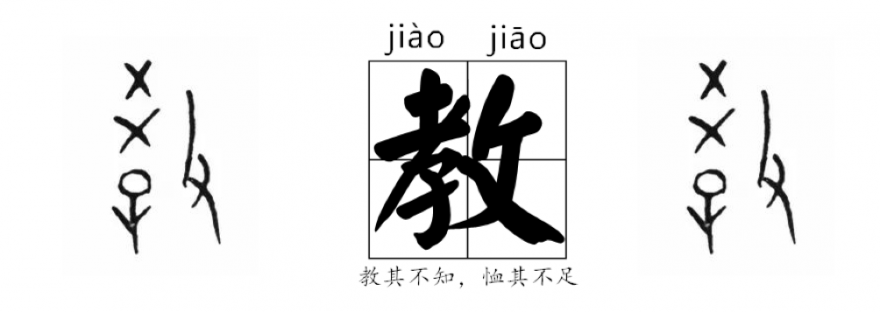
All Stick and No Carrot

How the ancients wrote (and enforced) “learning” – by Ash Henson

In the late 90s, there was a band out of Beijing called Cold-Blooded Animals that played a type of grunge music with Chinese characteristics. One of my favorite lyrics of theirs was, “No matter where you go, you can’t escape your own mind.” How true. In the same way, Chinese characters are also a product of a given cultural environment and a given mindset – an ancient Chinese hive-mind, if you will. As such, we can expect to see this reflected in the products of this culture. To put it more plainly, we can learn something about how the early Chinese viewed their world by studying the characters that they created.