
Essays

How Western Media Sees the Belt and Road

Tom Baxter looks at the frames through which Western reporters present the BRI

Ed: This article is a repost from Panda Paw, Dragon Claw, a new website about China’s footprint abroad founded by Ma Tianjie, who also blogs at Chublic Opinion. The site, in their words, “aims to promote civilian-centered storytelling by providing a platform for documenting, reflecting and critiquing Chinese “storytelling” about its footprint overseas … in a dialogue with their international peers.” Below is one of their earliest posts, by editor Tom Baxter on media coverage of the Belt and Road (BRI) , a central concern of the blog. Later, we will also publish one of their deep dives into impacts of the BRI on Chinese communities in Laos.

In April this year, the China-Africa scholar Deborah Brautigam published an article in the Washington Post which fact checked and myth-busted Western media reporting on China’s role in Africa. It included the debunking of such commonly held assumptions as: Chinese companies’ investments and projects not providing jobs or skills to local communities; Chinese banks’ loans as predatory and burdensome; and China as a land-grabbing power, a notion whose implications of colonialism by stealth Brautigam debunks as straight up fake news.
Translation

Love Tips from a Himalayan Forest

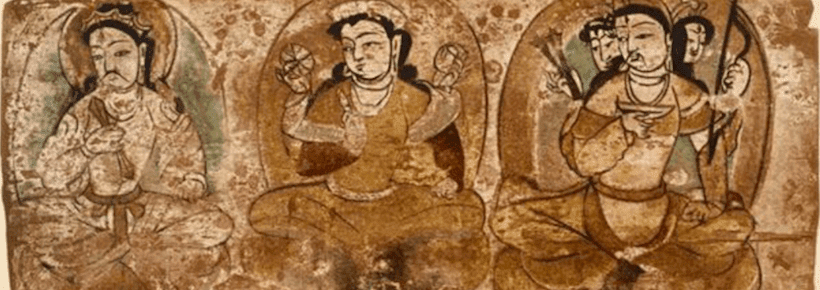
Excerpts from a forgotten Chinese love tract, translated by Jonathan Keir

In his 1940 novella Aiqing zhi Fuyin, Tang Junyi’s lapsed Zoroastrian protagonist, the deracinated “world philosopher” Delas, embodies the author’s disgust for both communism and capitalism, and his search instead for wartime refuge in a “spiritual philosophy.” Instead of explaining love away in Freudian, Darwinian or other ideological terms, Tang sought to persuade readers that “what we need to do is the opposite, namely to explain the lower spheres of human movement in terms of the higher ones.” Love, for Delas, is best understood as a transcendental source of mystery and wonder – not a predictable, Tinderesque outcome, but a triumph of human free will over such bleak determinism. – Jonathan Keir


Q&A

Translating Reform Era Fiction

Kevin McGeary talks to the translator of Empires of Dust by Jiang Zilong

Set in the fictional village of Guojiadian, Jiang Zilong’s Empires of Dust is a seven-hundred page tome that chronicles the rise and fall of Guo Cunxian, who transforms from impoverished peasant to formidable businessman. Described by the South China Morning Post as being “as epic, grandiose, ambitious, complex and turbulent as China itself,” this is the tenth novel by Jiang, who is often described as the father of China’s ‘reform literature,’ literature dealing with the reform and opening period after 1978. I caught up with co-translator Christopher Payne to discuss the novel, and the work involved in rendering it into English.

Of all the characters, Guo Cunxian goes through the biggest trajectory, from rejecting the sexual advances of Sister Liu to habitually committing infidelity, from eking out a living making coffins to becoming powerful and corrupt. Does he represent both the heroic and reprehensible qualities that made China’s economic boom possible?

Guo has very humble roots. His family did not participate in the Communist revolution – so no Red history to claim as their own – nor did they join up with the Party to become cadres or other revolutionary workers after 1949. They were the quintessential poor peasant family.

Essays

Hong Kong in WWII

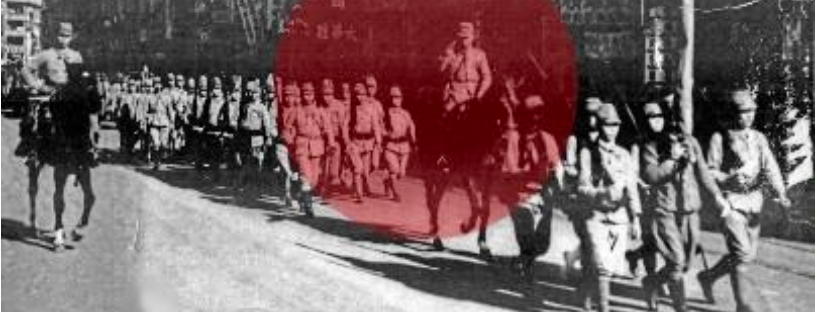
How war changed a city and exposed its colonial lies – James A. Clapp

Somewhat in the same manner that fire anneals metals, terrible historical periods seem to have a way of hardening the resolve of cities. The conquered and occupied city must find new ways to survive in the face of subjugation and exploitation. When they do prevail, there is usually a new reality and understanding. In the case of Hong Kong during World War II, the British were no longer the great protecting overlord. When the local Chinese saw their rulers overrun and paraded in ignominy through the streets and into Japanese concentration camps, and that it would take the Americans to finally subdue the Japanese, and that a new China was emergent, there was indeed a new reality. War changes things, nations, people and cities. The British imperium in Asia was doomed. Two years after the end of the war the “jewel” in Victoria’s imperial crown was gone.

Essays

Fantasy and the Forbidden City

China’s most popular costume drama tells more about the present than it does about the Qing dynasty – Tobie Meyer-Fong

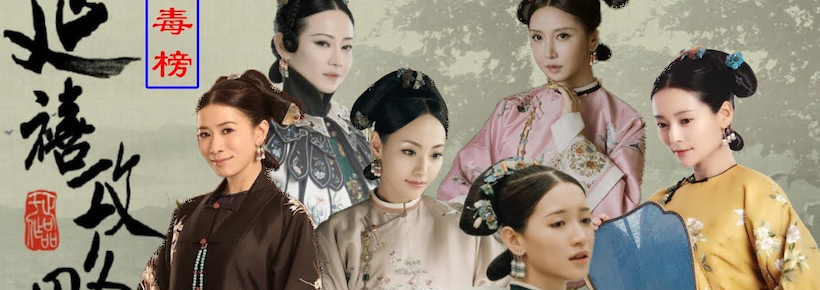
During the summer of 2018, The Story of Yanxi Palace (延禧攻略), a soap opera set in the Forbidden City, mesmerized audiences with its sumptuous costumes and lavish sets. Media analysts celebrated the protagonist – a concubine rising within the ranks – as a bold female exemplar, and noted that it provided a promising vehicle for education about China’s cultural heritage both at home and abroad. The show was made and initially screened by iQiyi, a Chinese internet streaming company owned by Baidu, although it was later also broadcast on conventional and cable television channels. (A version with English subtitles can be found on YouTube.) It proved hugely popular, with episodes streamed over 15 billion times by Chinese viewers. The BBC online breathlessly announced that Yanxi Palace was the “most Googled TV show of 2018 globally,” even though Google is blocked in China.

The series portrays China’s dynastic past in ways consistent with other productions of the late 20th and early 21st century. It glorifies the expansive and multicultural empire of the High Qing period, which roughly coincided with the 18th century. It presents a courtly world filled with marvelous objects of exceptional value and expense. It reflects the muscular vision of China’s past currently promoted by the state, as well as the material aspirations of today’s rich and powerful. In particular, the show spotlights the magnificence of the Forbidden City, which itself has become a brand central to patriotic and consumer-friendly imaginings of the Chinese past – with specially branded cosmetics, elegant reproductions of palace artifacts, ticketed evening extravaganzas, a publishing house, and participation by palace curators and craftsmen in reality television shows. Yanxi Palace buys into an officially sanctioned and consumer-oriented vision of Chinese history, focused on power, wealth, and nationally-identified things.