China Conversations

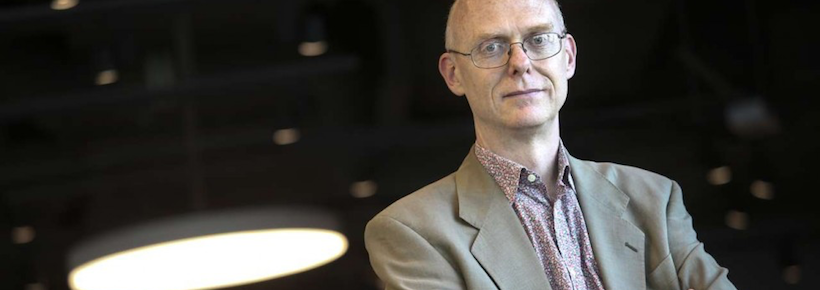
Robert Bickers: “Look for China and You Will Find It”

Could you outline how your interest in China, and Chinese history, began?

The logical answer might be: I spent three years of my childhood living in Hong Kong, where my father was posted with the Royal Air Force to a helicopter squadron. I was just six when we arrived, but remember the first day vividly. But it’s not that. Applying to London University’s School of Oriental and African Studies (SOAS) to study Mandarin just seemed like a good idea at the time. I might say specifically that it was a course on ‘Chinese Peasants and Revolution’ at SOAS, led by Charles Curwen, who had worked in China with the Friends’ Ambulance Unit and stayed on in China until 1954. In London in the mid-1980s, Curwen was no less wrapped up in the Chinese revolution than he had been in China. But it’s probably not that course either. Again, it just seemed a good idea at the time when I applied to study for a doctorate in Chinese studies; there weren’t many people in that field in the UK then.

Reviews

Seven Years Not in Tibet

HT reviews Blessings from Beijing by Greg C. Bruno

In Blessings from Beijing, journalist Greg Bruno sets out to chronicle the slow fracturing of the Tibetan exile movement in India and Nepal. Once an international cause célèbre and a cultural force to be reckoned with, the movement is now entering its seventh decade and is showing signs of decline. The Dalai Lama is in his eighties, Chinese harassment is becoming better funded and more effective, and the younger generations of refugee Tibetans are jumping ship to the West, back to the PRC, or in any other direction they can. Bruno's reports from fin-de-siècle Dharamsala are timely. However, his failure to grapple with the complexities of the 21st-century People’s Republic weakens his analysis, and the most interesting stories often seem just beyond his grasp.

Dispatches, Translation

A Foreigner in Beijing

Reflections of a returnee – Liuyu Ivy Chen

When I arrived in Beijing in January, I paused on the sidewalk and looked up: the sky was blue, cloudless, immense. I went to college in this city, and often visited after graduation. Back then, Beijing’s sky was typically a murky palette, a mix of smog, dust and sand from carbon emissions, courtyard demolitions, subway construction and northwestern storms. I soon learned that the government had shut down the city’s coal-burning heating systems during a recent eviction campaign which targeted low-skilled migrants. This controversial operation was vaguely documented in the Chinese media, but its result was clearly reflected on the sky.

Hidden History

The Chinese Doctor Who Beat the Plague

An epidemic averted in Manchuria – Jeremiah Jenne

In the winter of 1910, Dr. Wu Lien-teh stepped onto a frigid train platform in the northern Chinese city of Harbin. He was there to solve a medical mystery, at great personal risk. Over the past few months, an unknown disease had swept along the railways of Manchuria, killing 99.9% of its victims. The Qing Imperial court had dispatched Malayan-born, Cambridge-educated Dr. Wu north to stop the epidemic before it spread to the rest of the empire.

Chinese Corner

Chinese Corner Final Exam

Take the test, win a prize

Editor’s note: When we made the incision point into linguistics exploration back in October 2017, we promised you no tests. What we really should have promised you are no grades. Take this “final exam” at your leisure – this is untimed, “open-site,” and really just for fun. That said, answers are due by December 31. In the new year we’ll check the submissions and award a free book of bilingual Chinese stories to the reader with the highest score. Best of luck, language nerds!